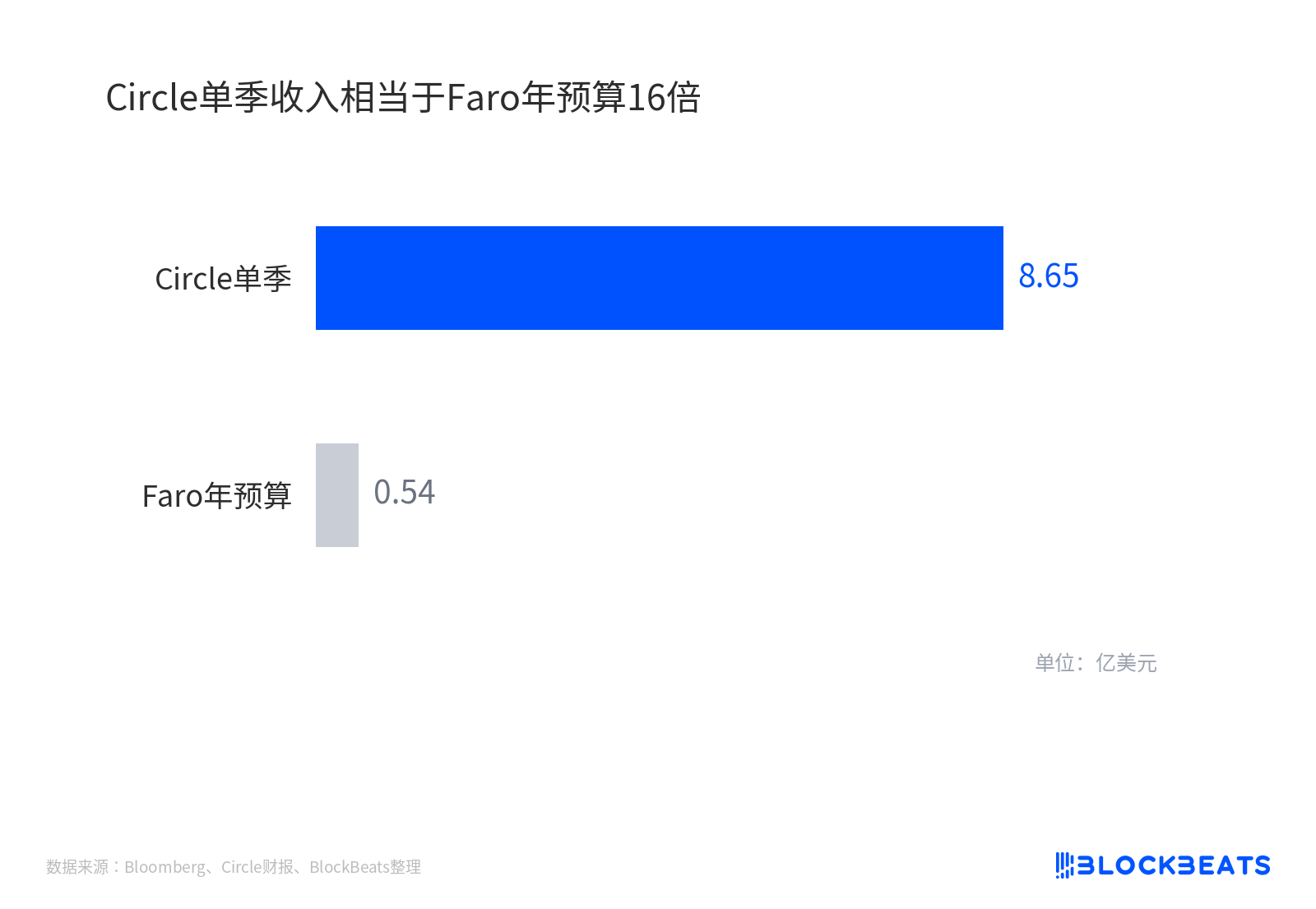
A reported $270 million commitment to Project Faro would fund operations—not the reserves backing a stablecoin. The distinction matters: operating capital can help establish an issuer, but it does not show that a token has been issued, that its reserves are in place or that holders can redeem it.
This is a historical report, originally published by BlockBeats on November 11, 2026, at 09:44 UTC+8. BlockBeats cited a November 10 Bloomberg report, based on people familiar with the matter, that institutions including Goldman Sachs, Citigroup, Santander and Deutsche Bank had collectively committed approximately $270 million to cover five years of operating expenses for a joint stablecoin venture. The report identified the US-registered project by its internal name, Project Faro, and said it was still seeking a chief executive. BlockBeats said the banks and project had not publicly confirmed the reported commitment. Individual contributions were not disclosed.
A proposed issuer, not an issued token
On September 1, 2026, a group of 21 institutions announced plans, subject to closing conditions, to establish a company in the second half of 2026. Their stated aim was to issue a US-dollar stablecoin in the first half of 2027, with a euro stablecoin the next priority. The announcement said the company’s name would be disclosed later; it did not specify the $270 million figure. The public announcement and the reported funding should therefore not be treated as confirmation that all 21 institutions contributed equally—or contributed at all—to that amount.
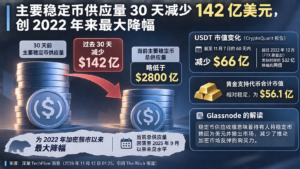
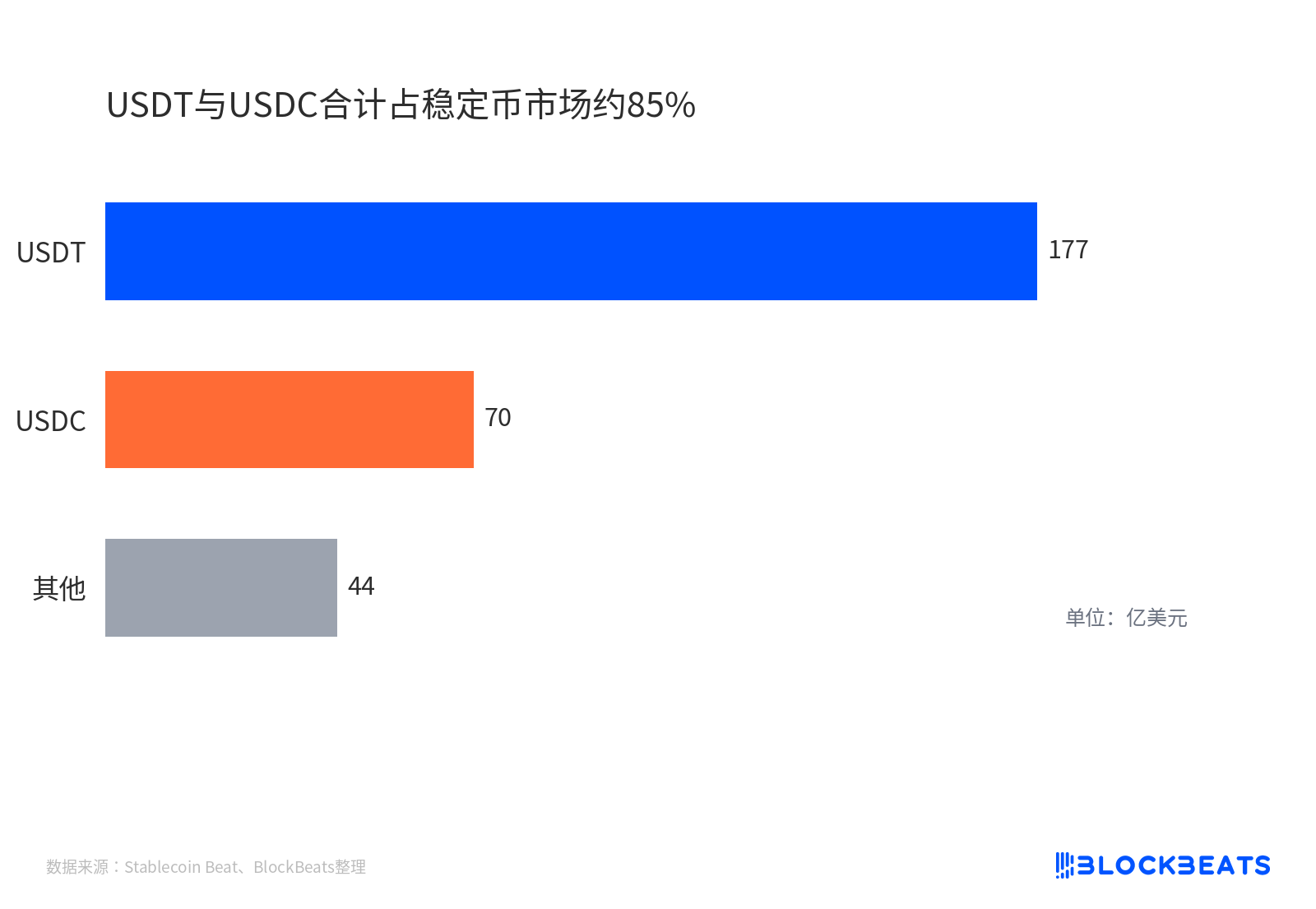
BlockBeats calculated that $270 million spread evenly over five years would be about $54 million a year. That is an operating-budget comparison, not a reserve figure or a company valuation. For scale, it reported approximately $290 billion in dollar-stablecoin circulation, including about $176 billion in USDT and $70 billion in USDC. Those two tokens together accounted for roughly 85% of the stated total.
What remained unresolved
BlockBeats identified the issuer’s public identity and leadership, licensing route, reserve custody and first blockchain as questions to watch. It reported no disclosed allocation of the funding, chain plan or distribution agreement. Although the Bloomberg account described the venture as registered in the US, that description does not establish that its licensing and issuance arrangements were complete.
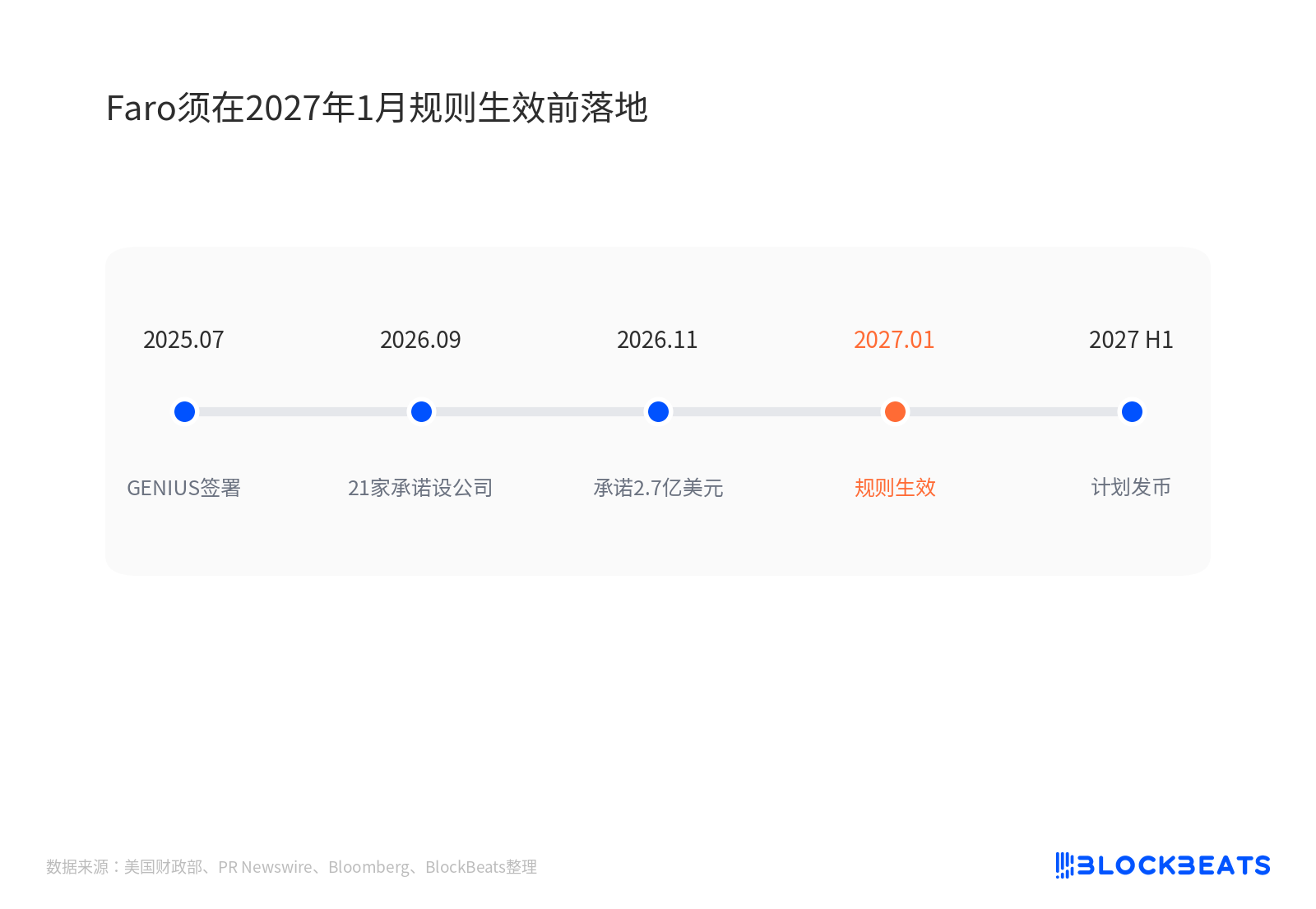
The article placed Faro’s timetable against provisions of the US GENIUS Act that it said would take effect on January 18, 2027. A planned launch in the first half of 2027 was still a target, not an enacted product or an assured launch date.
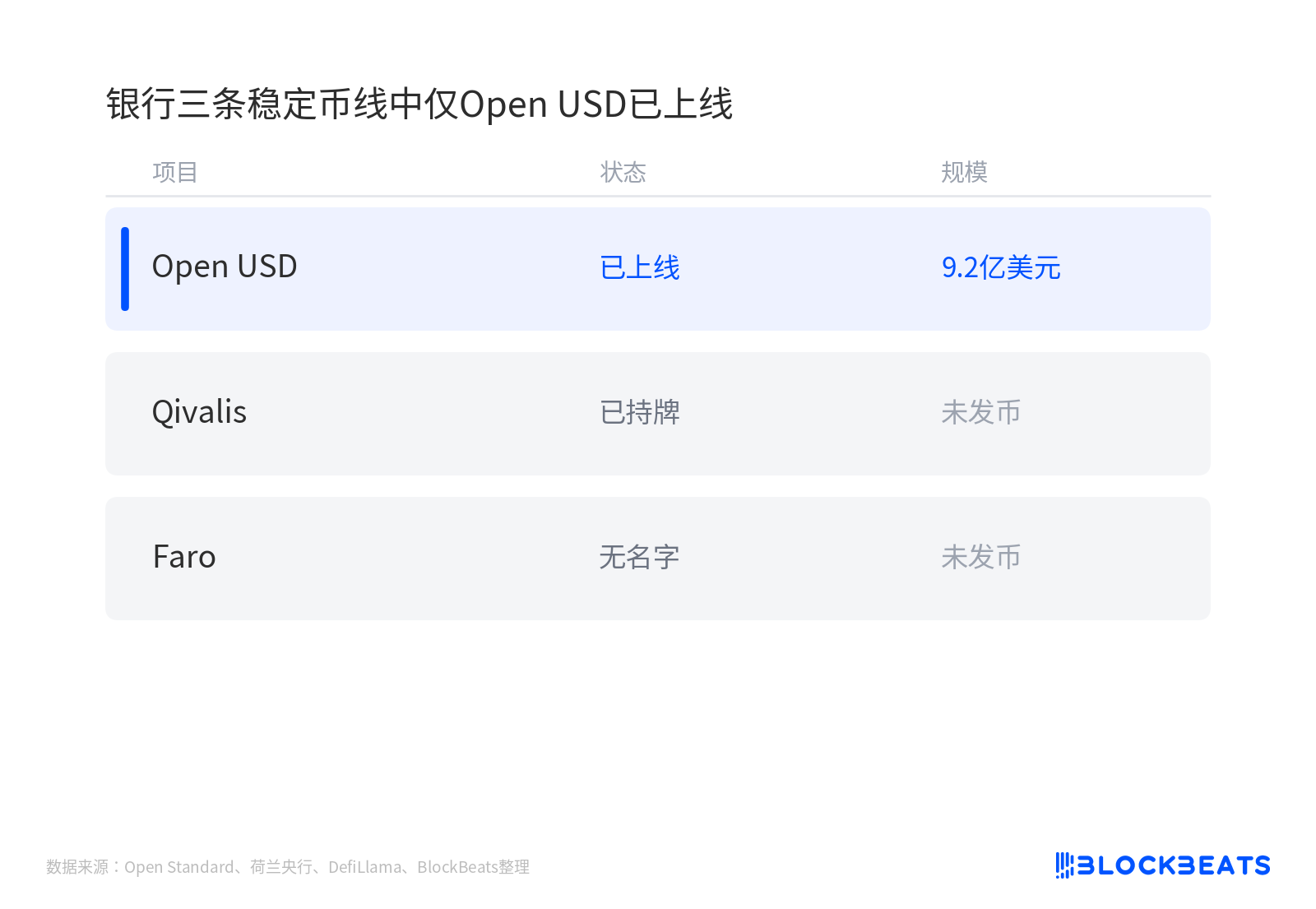
Faro would also face existing distribution networks. BlockBeats reported that Bridge-issued Open USD was already live on Ethereum, Solana, Base and Tempo as of September 30, while European bank venture Qivalis had received Dutch electronic-money-institution authorization on October 13 and was targeting a euro stablecoin. These are different projects and stages of development, not evidence that Faro had launched.
If Faro eventually issues a token, the questions for holders will be specific: what assets back it, who controls those assets, and under what terms and through which entity redemption works. A bank’s participation or an operating commitment alone answers none of them.
Source: theblockbeats.info (originally published 2026-11-11 09:44 UTC+8)