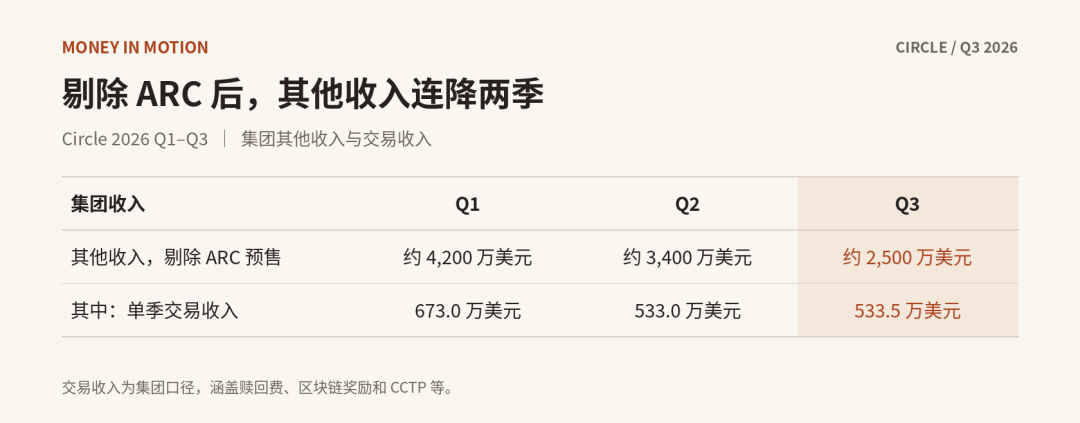
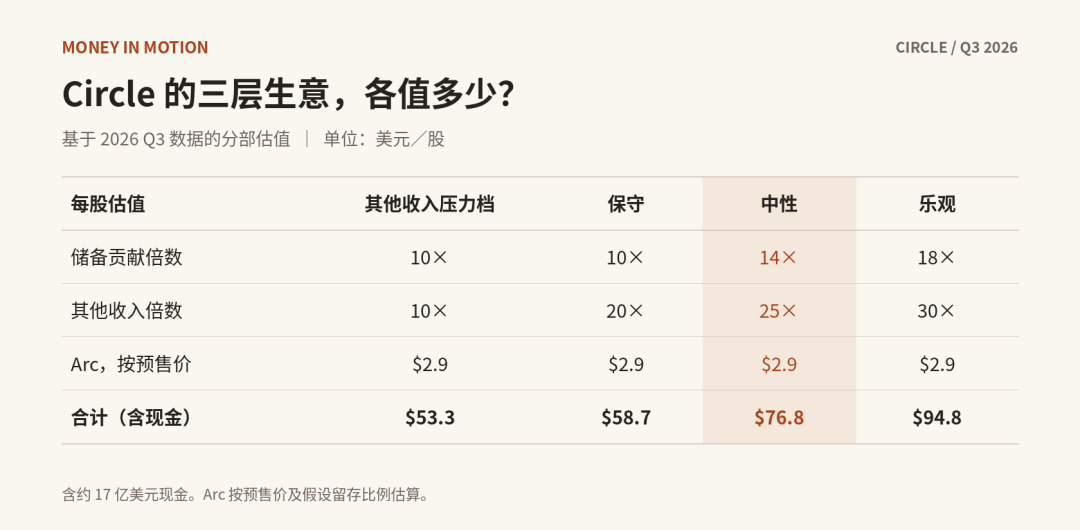
Circle’s third-quarter 2026 results show a widening gap between reported earnings and the income generated by USDC reserves. As reported on November 17, 2026, the company recorded $865 million in total revenue and reserve income, up about 23% from the previous quarter. That figure included approximately $182 million in Arc token presale revenue.
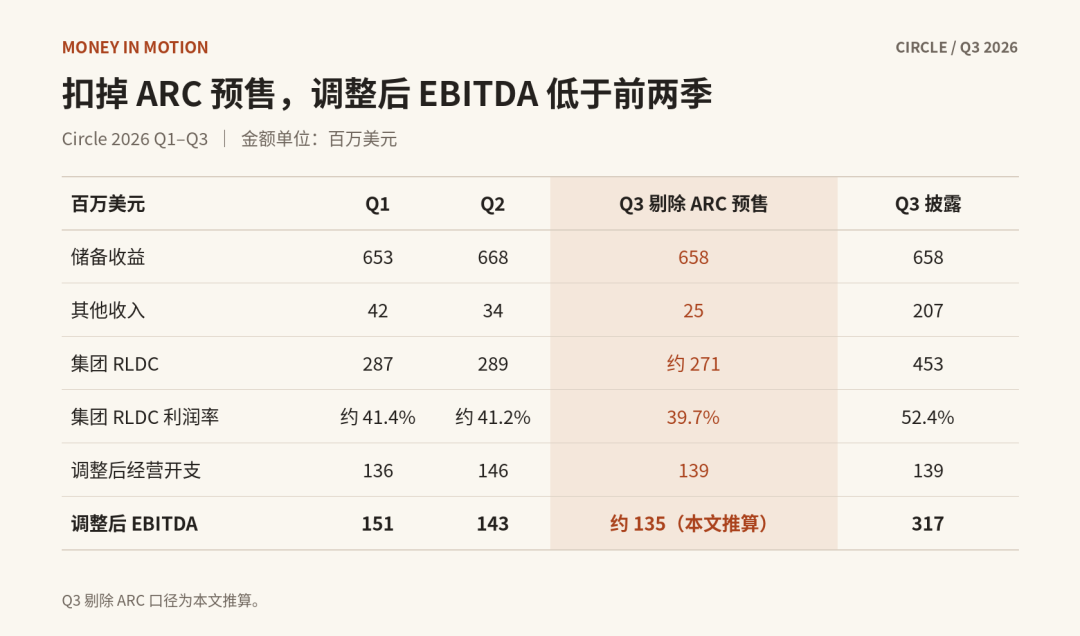
Adjusted EBITDA rose to $317 million from $143 million in Q2. The original analysis subtracts the Arc presale revenue as a rough comparison, producing about $135 million for Q3—below both Q2’s $143 million and Q1’s $151 million. That subtraction is an analytical estimate, not a company-reported adjusted EBITDA figure.
Reserve income under pressure
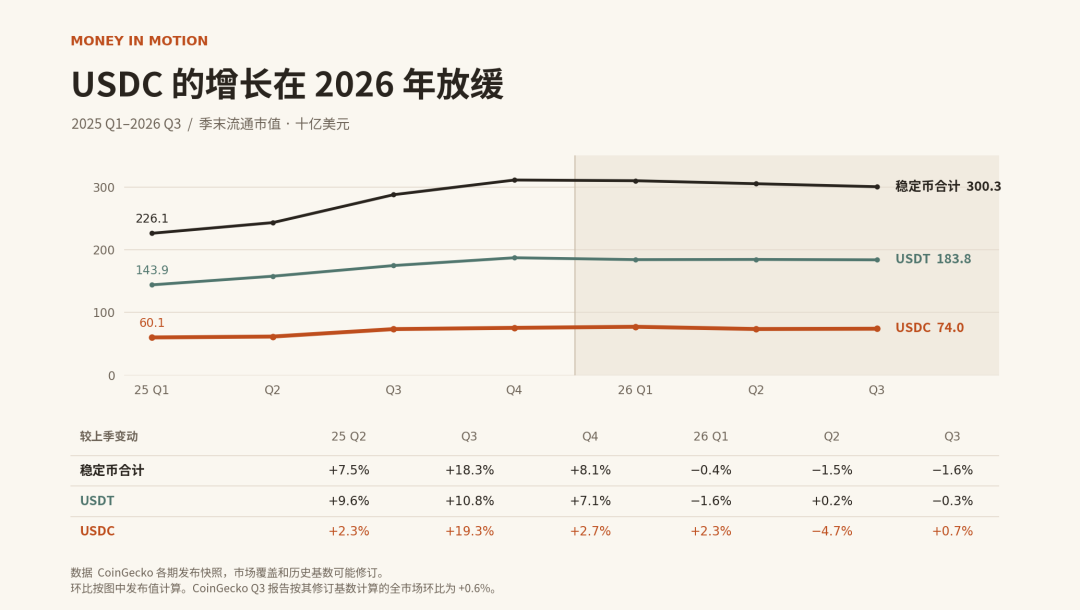
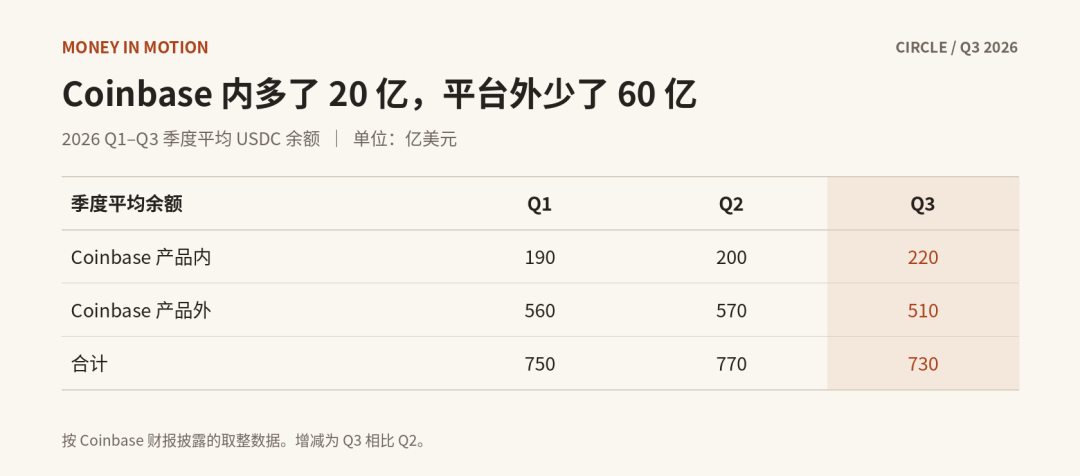
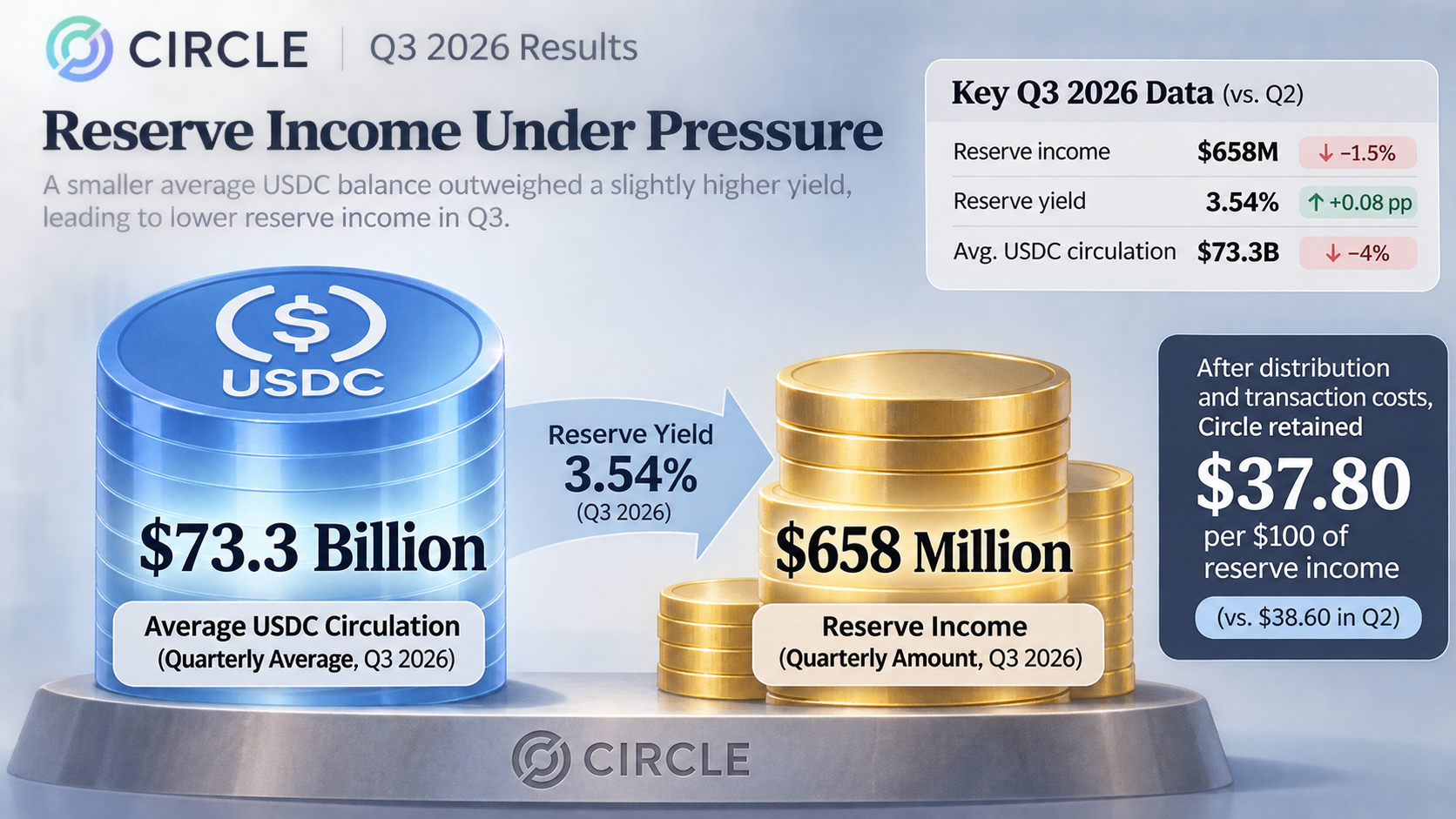
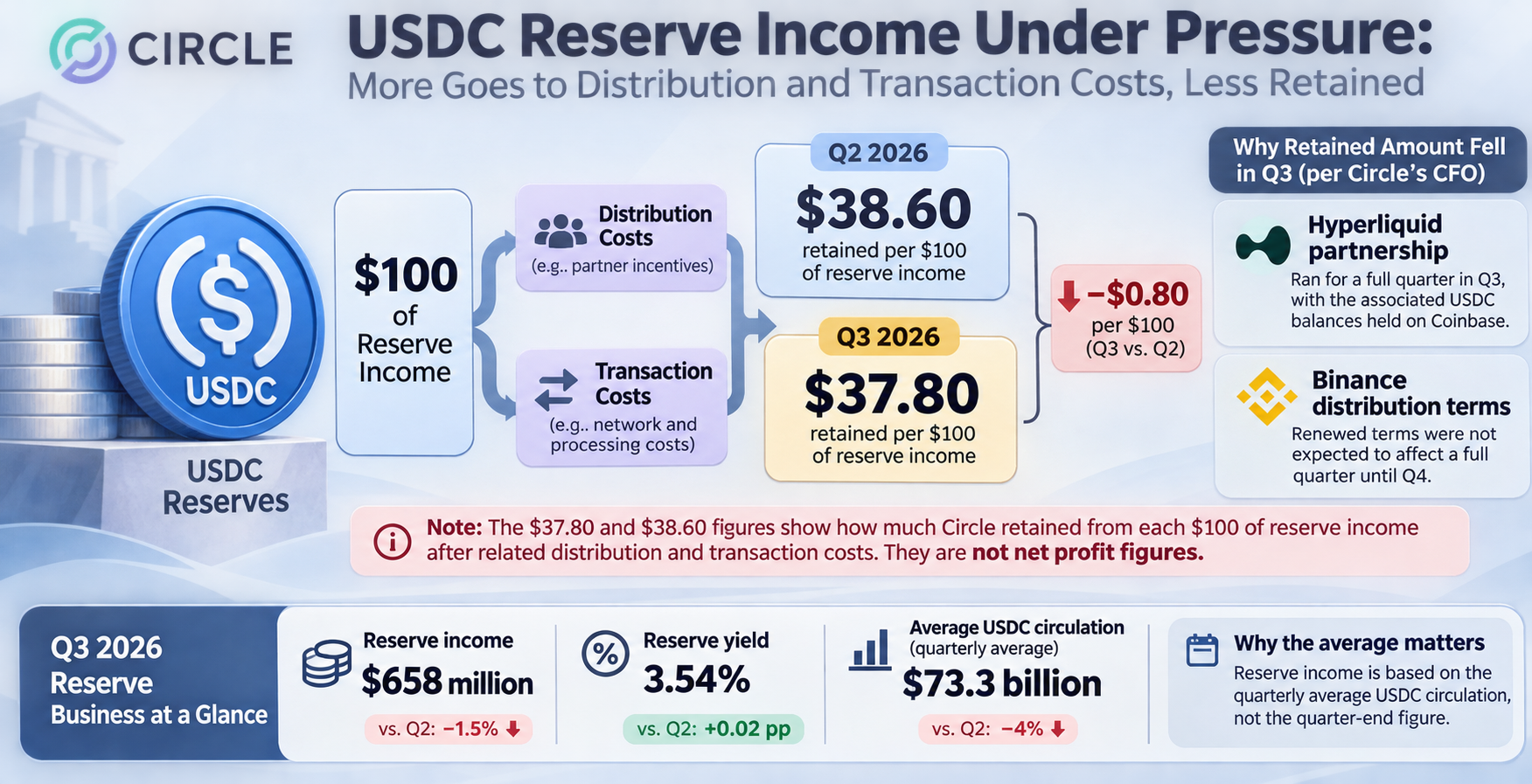
Reserve income fell from $668 million in Q2 to $658 million in Q3. Although the reserve yield edged up to 3.54%, average USDC circulation declined 4% to $73.3 billion over the quarter. The quarterly average matters for reserve income; a quarter-end circulation figure does not measure the balance held throughout the period.
After related distribution and transaction costs, Circle retained $37.80 per $100 of reserve income, down from $38.60 in Q2. Circle’s CFO primarily attributed the decline to a full quarter of its Hyperliquid partnership, with the associated USDC balances held on Coinbase. The renewed Binance distribution terms were not expected to affect a full quarter until Q4.
Payment volume is not yet identifiable payment revenue
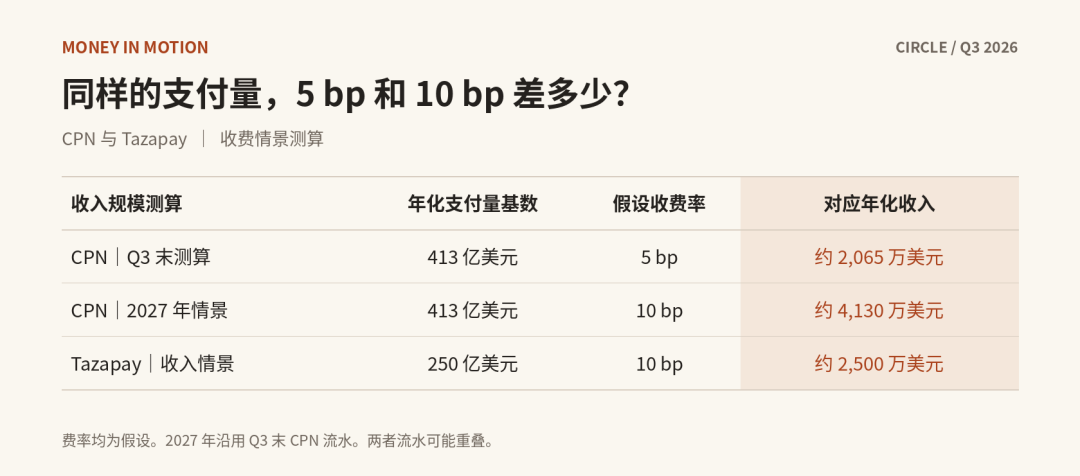
Circle Payments Network (CPN) reported a quarter-end annualized payment volume of $41.3 billion, calculated from roughly $3.4 billion processed in the preceding 30 days. At a hypothetical fee of five basis points, maintaining that pace for a year would imply about $20.65 million in revenue. Circle’s reported transaction revenue also includes other activities, however, so the source says CPN’s actual fees and revenue cannot yet be isolated.
Circle also proposed acquiring the Tazapay shares it did not already own for approximately $400 million in stock, subject to closing adjustments. Tazapay reported annualized payment volume above $25 billion, about 60% of it involving stablecoins. It was already a CPN design partner. The acquisition and any additional revenue from it remained prospective in the November 17 analysis; neither payment volume nor an assumed fee rate establishes what Circle will earn.
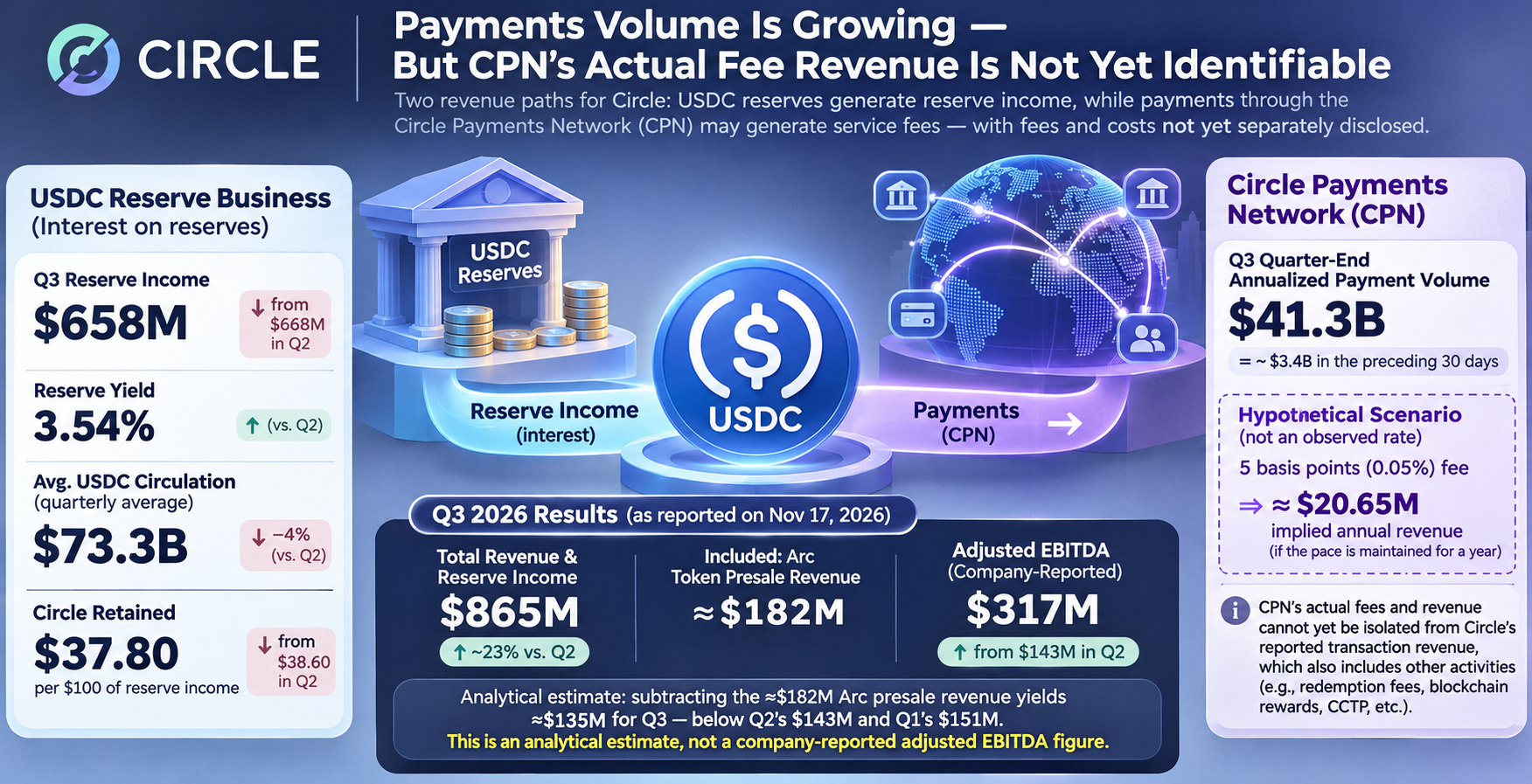
For Circle’s stablecoin business, the distinction is consequential: USDC balances generate reserve income, while payments may generate service fees even when funds do not remain in circulation. Q3 disclosed pressure on the former, but did not yet provide a separate account of recurring CPN fees and their costs.