As reported on November 23, 2026, declines in gold and Bitcoin had renewed scrutiny of Tether’s reserves. The question was whether losses on those holdings could erode the assets held above USDT’s liabilities—not whether a redemption crisis had already occurred.
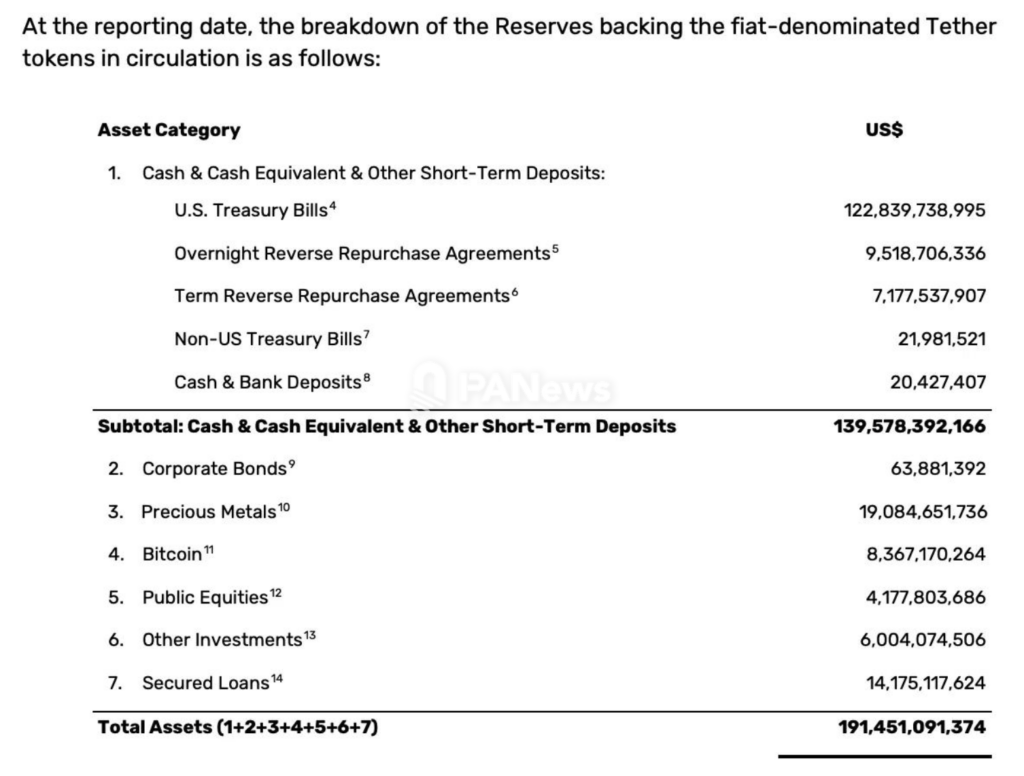
Tether’s third-quarter reserve report put its assets at about $191.45 billion and liabilities at about $183.5 billion, leaving a $7.95 billion buffer. The report valued its gold at roughly $19.08 billion and Bitcoin at $8.367 billion. Those holdings can add to the buffer when prices rise and reduce it when prices fall.
Crypto analyst @fozzydiablo argued that recent declines of more than 30% in Bitcoin and about 15% in gold had consumed much of that buffer. The analyst warned that further losses, particularly if loans and other assets were discounted, could leave Tether close to having fewer assets than liabilities. That is an analyst’s assessment, not a reported finding that USDT was undercollateralized.
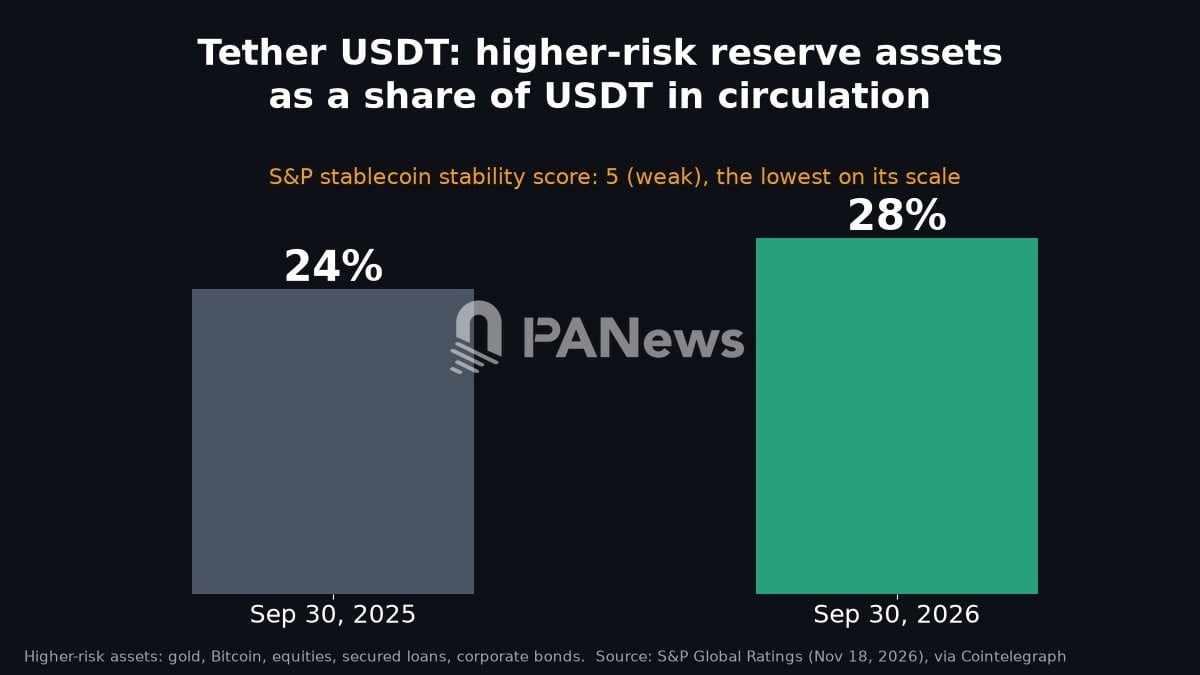
S&P Global Ratings assigned Tether’s ability to maintain USDT’s dollar peg a score of 5, the lowest on its five-point scale. It cited a growing share of higher-risk assets and gaps in disclosure. S&P said those assets amounted to 28% of circulating USDT as of September 30, up from 24% a year earlier, and warned that steep price declines could exhaust the excess buffer. Tether disputed the assessment, saying the problem lay with S&P’s framework rather than its reserves.

A treasury burn was not a customer redemption. On-chain monitoring cited in the report showed Tether burning 8 billion USDT over the preceding 20 days. The tokens were unissued inventory in Tether’s treasury, rather than USDT held by customers, so that burn did not itself require dollar payouts.
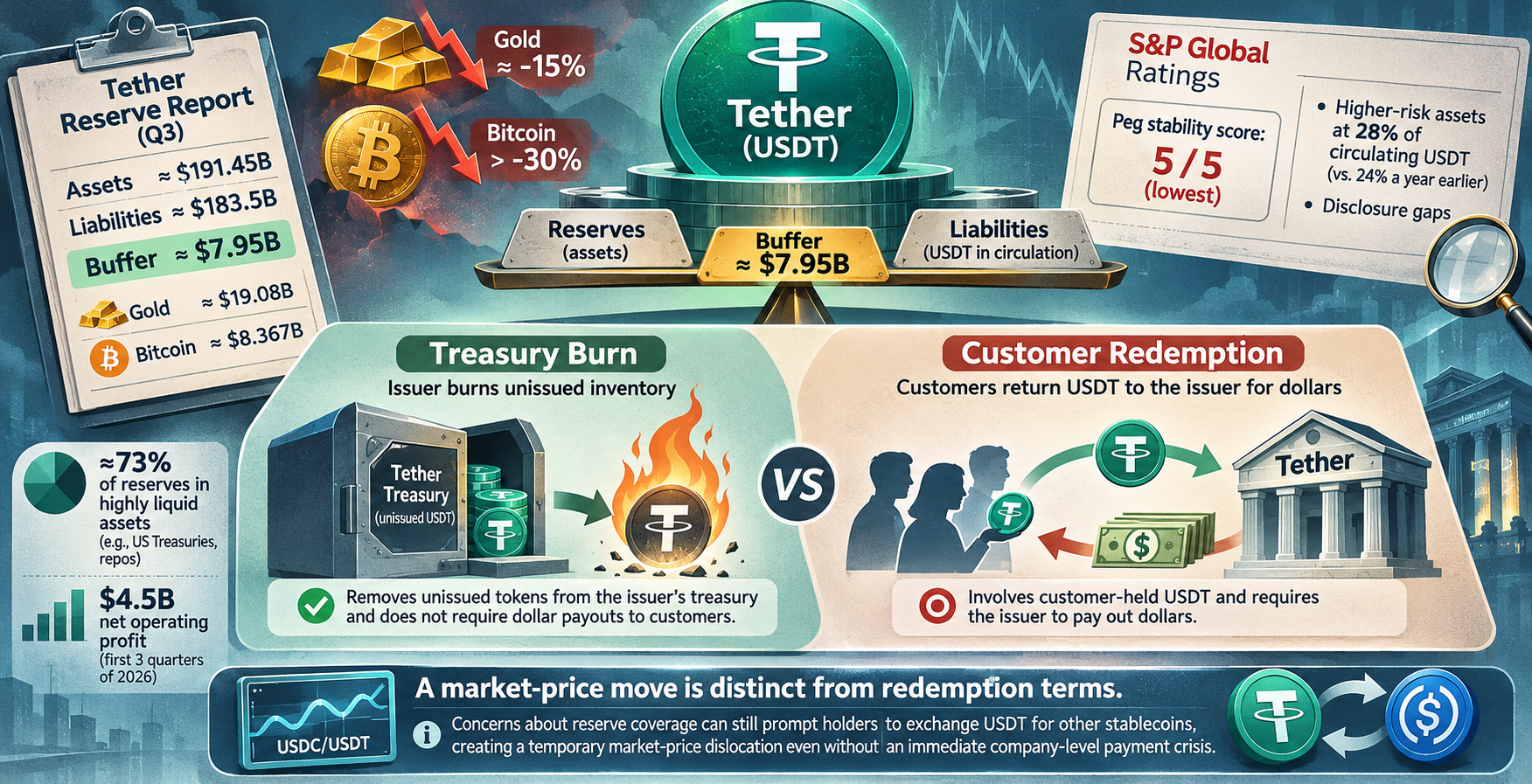
The report said roughly 73% of Tether’s reserves consisted of highly liquid assets, including short-term US Treasuries and repurchase agreements. It also reported $4.5 billion in net operating profit over the first three quarters of 2026. Neither figure eliminates exposure to losses or establishes how a future rush to redeem would unfold.
A market-price move is distinct from redemption terms. Binance data cited in the report showed the USDC/USDT pair reaching 1.006 USDT on November 20 before narrowing to around 1.00121 USDT at the time of reporting. Crypto researcher CM argued that concern about reserve coverage could still prompt holders to exchange USDT for other stablecoins, creating a temporary market-price dislocation even without an immediate company-level payment crisis.