
Bitcoin fell back below $60,000, trading at about 59,596.45 USDT at 08:12 Beijing time on November 25, 2026, down 2.56% over 24 hours. Ether traded at 1,673.88 USDT, down 1.93% over the same period. At 08:04, total crypto market capitalization stood at approximately $2.072 trillion, down 4.66% in 24 hours.
Bitcoin ETF flows and Strategy’s holdings
November 23 was the latest day with complete US spot Bitcoin ETF figures. Farside data showed $569.7 million in net outflows that day, including $509.3 million from IBIT. Funds that had reported for November 24 showed a combined $7.1 million net inflow, but the partial tally did not establish whether flows had turned positive for the day.
Strategy disclosed on November 23 that it held 851,305 BTC as of November 22, at an average cost of about $75,446 per bitcoin including fees. The November 25 market price was roughly 21.10% below that average, an unrealized difference rather than a realized loss. Strategy shares fell 8.12% on November 24; the share-price move was not evidence that the company had sold bitcoin. Coinbase fell 5.92% and Robinhood fell 2.55%.
Bitget’s liquidation map placed the nearest potential concentrations of long liquidations around $59,200 for bitcoin and $1,665 for ether, with further concentrations near $58,700 and $1,648, respectively. Above the market, potential short liquidations clustered near $60,600 and $61,200 for bitcoin and $1,708 and $1,724 for ether. These were estimates of where leveraged positions might face liquidation, not records of completed liquidations or evidence of a price reversal.
Circle and Paribu explore USDC opportunities in Turkey
Circle and Paribu announced on November 24 that they had signed a memorandum of understanding to explore opportunities in Turkey involving USDC, Arc-related products, real-world asset tokenization and institutional custody. The memorandum sets out areas for cooperation; it does not establish that a product has launched or that the companies have finalized compliance arrangements.
Separately, South Korea’s Financial Services Commission outlined plans on November 24 to advance comprehensive digital asset legislation. The proposal would distinguish activities including trading, intermediation, custody and asset management, and strengthen requirements for market entry, governance and protection of customer assets. Those provisions remained at the legislative stage; their effect would depend on the final text and its implementation.
Chip stocks retreat ahead of US inflation data
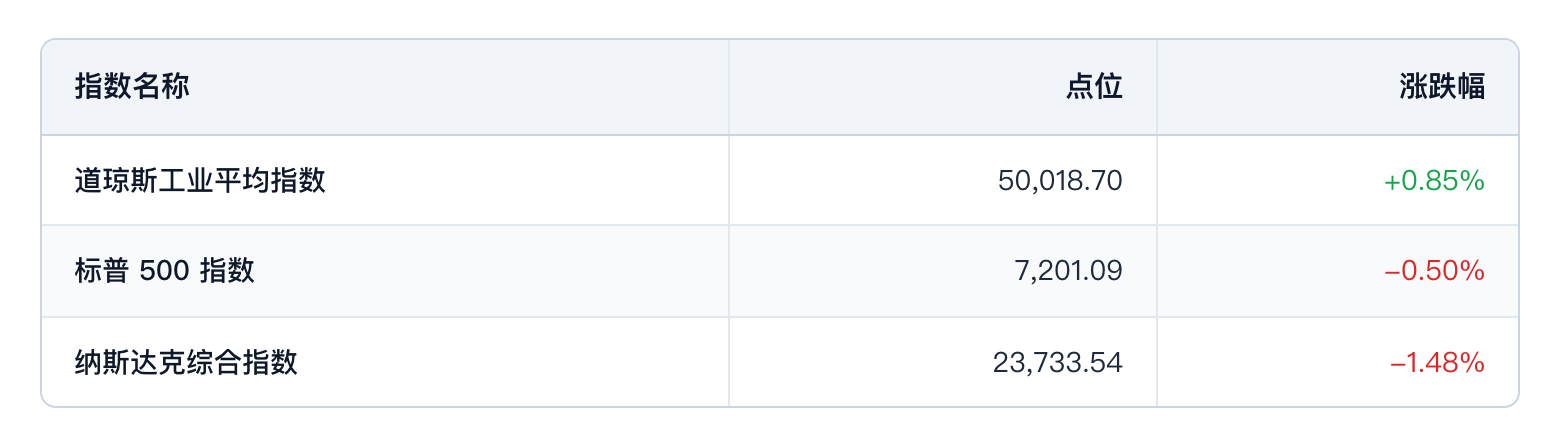
US equities were mixed on November 24. The Nasdaq fell 1.48% and the S&P 500 lost 0.50%, while the Dow rose 0.85% to reclaim 50,000. Nvidia fell 5.86%, AMD lost 8.86% and Micron dropped 11.01%. Apple and Microsoft gained 1.43% and 0.74%, respectively. The 10-year Treasury yield edged lower, so a rise in yields that day did not explain the decline in chip stocks.
Dell’s results highlighted the distinction between AI server orders and sales. After its shares closed down 11.83%, Dell reported $60.2 billion in new AI server orders for its fiscal third quarter of 2027 and an ending backlog of $132.3 billion. Those orders still had to translate into deliveries, revenue and cash. The regular-session decline preceded the earnings release.
US consumer confidence rose to 103.3 in November from a revised 91.9 in October, its highest reading since January 2025. Conference Board senior economist Fergus McCormick said on November 24 that reduced uncertainty after the midterm elections may have contributed. The survey showed improved views of jobs and business conditions, not an increase in actual spending. US personal consumption expenditures inflation, income and spending data were due later on November 25.
