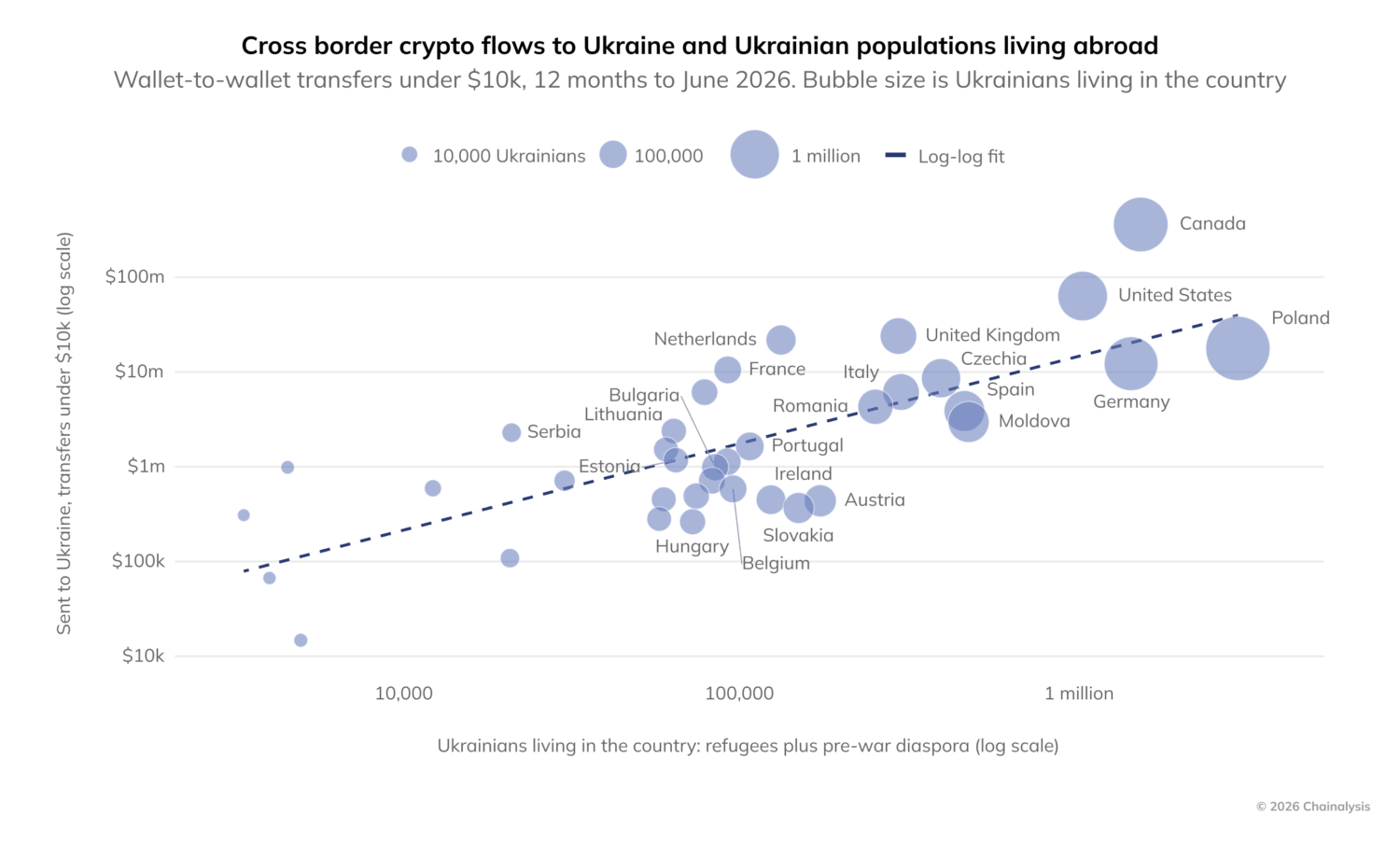
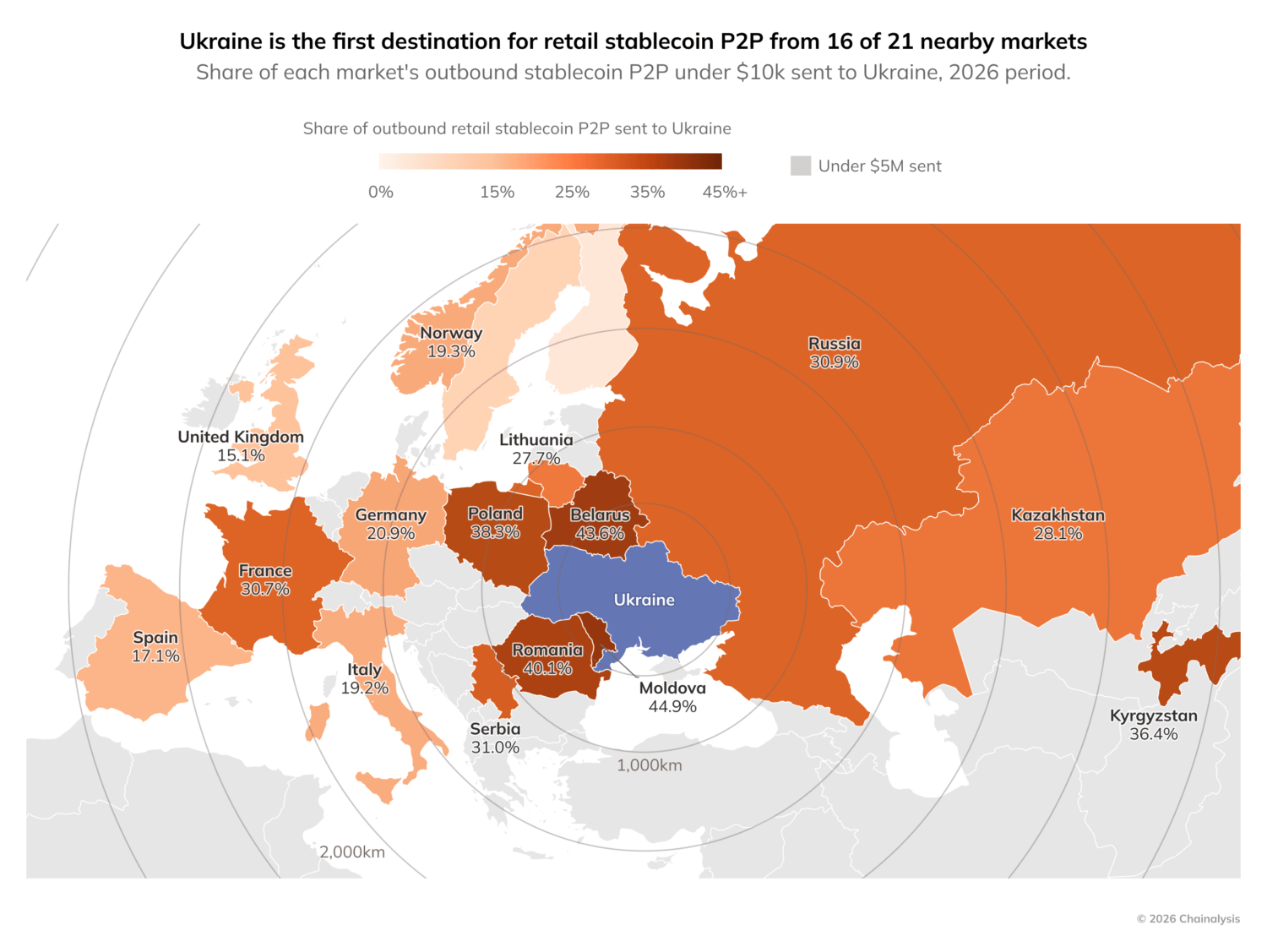
In Chainalysis figures reported on November 18, 2026, Ukraine was the leading destination for retail peer-to-peer (P2P) stablecoin transfers from 16 of 21 nearby Central and Eastern European markets. The pattern points to a cross-border use for stablecoins amid the displacement caused by the Russia–Ukraine war, though transaction data alone cannot establish why each sender made a transfer.
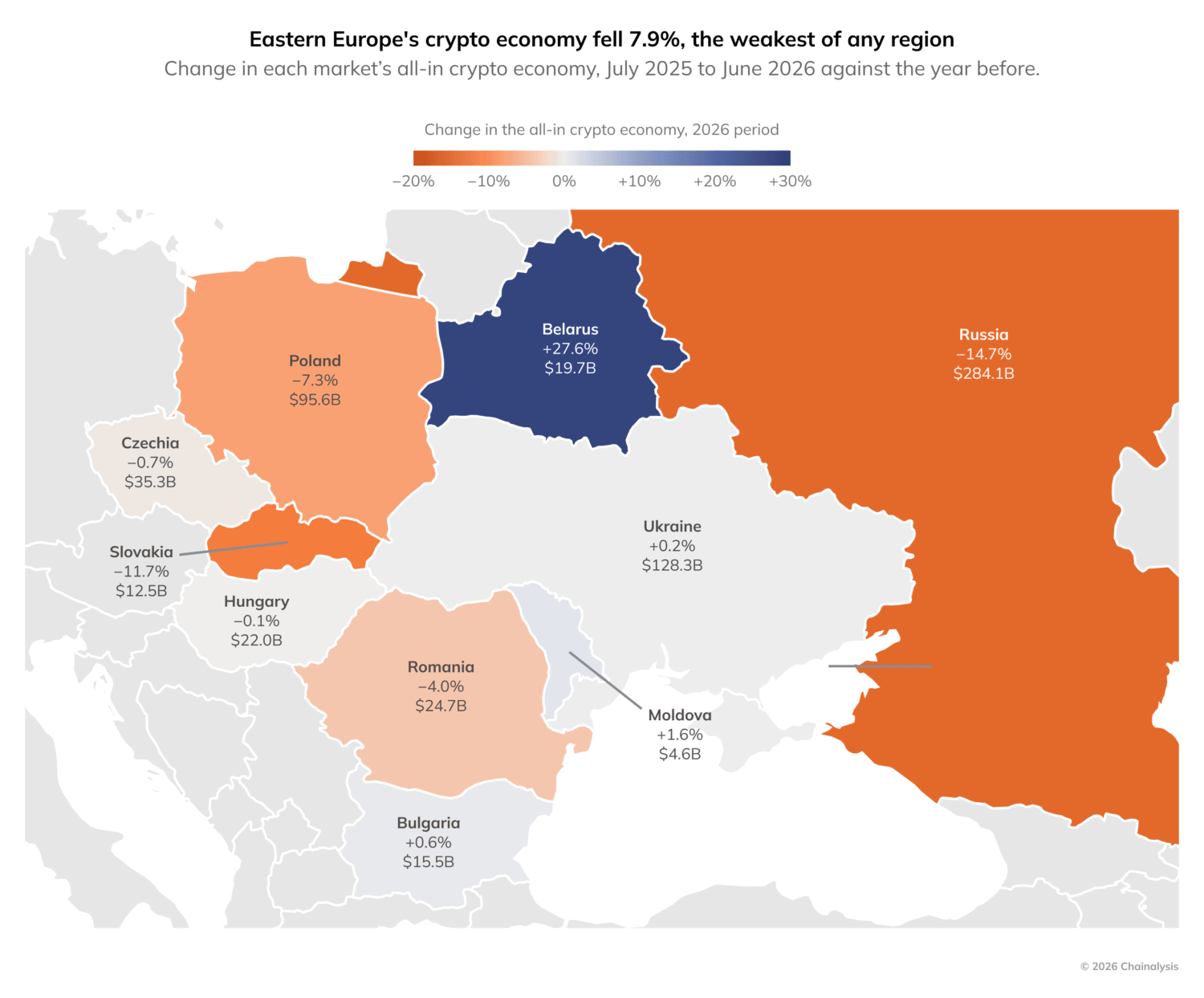
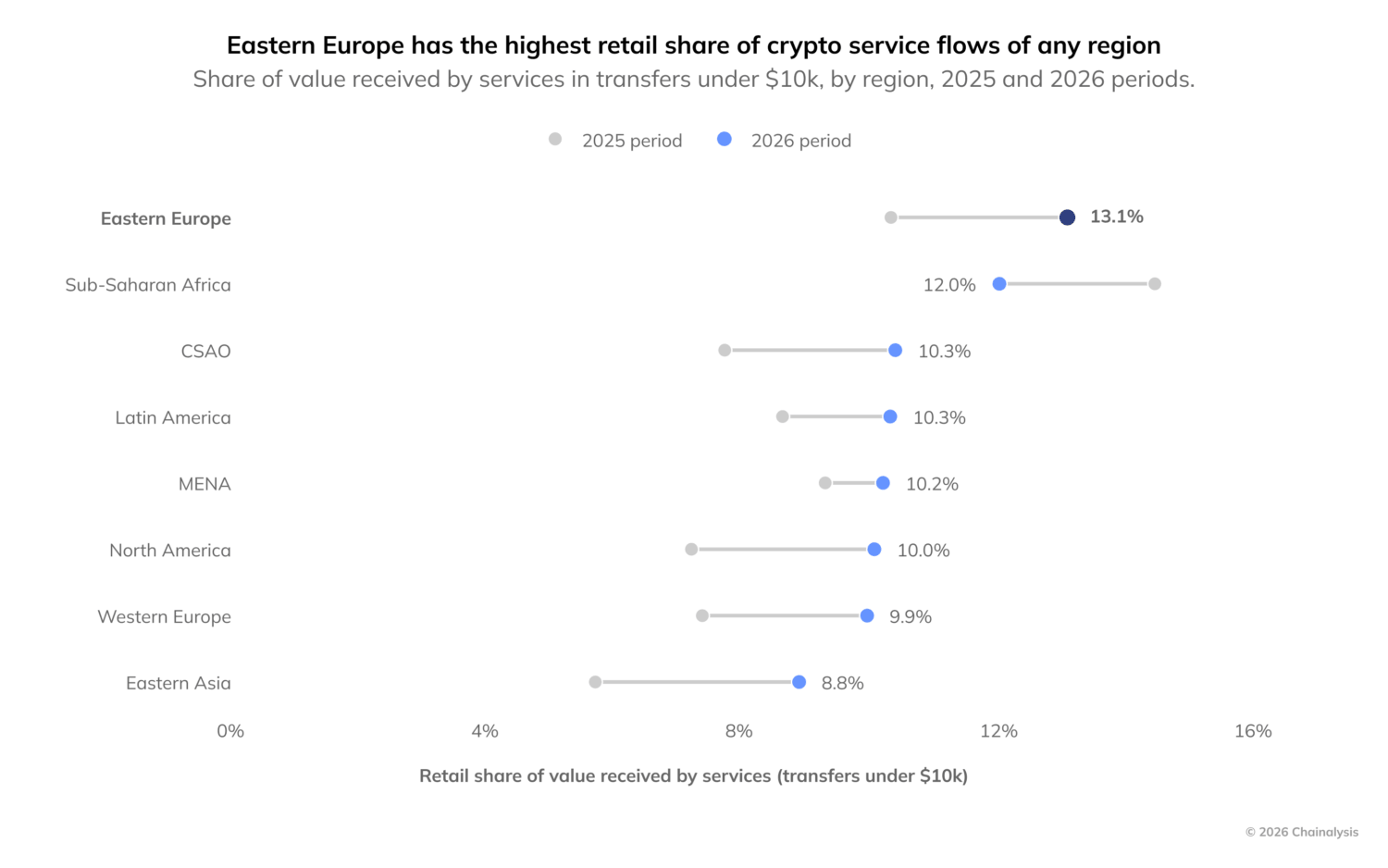
The stablecoin activity stood out against a weaker regional market. Chainalysis reported that Eastern Europe’s overall crypto receipts fell 7.9% year over year during its measurement period, while transfers below $10,000 made up a larger share of inflows to crypto services than in any other region. Annual retail inflows to those services exceeded $11 billion.
Poland’s P2P shift
In Poland, P2P trading volume in USDT and USDC rose fourfold, while Bitcoin P2P volume fell by one-third, according to the reported figures. That comparison describes trading activity, not the terms on which either stablecoin could be redeemed or the condition of its reserves.
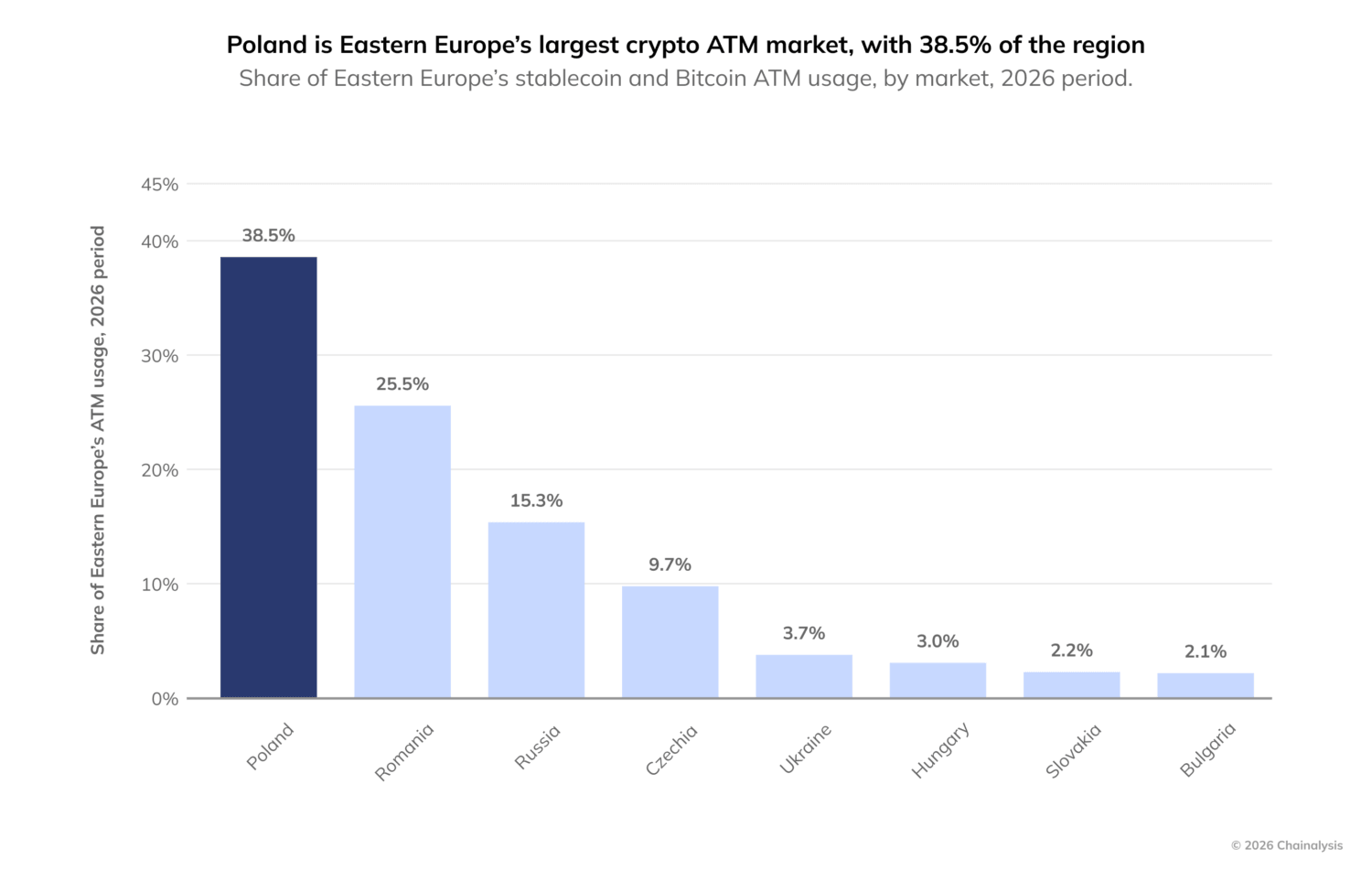
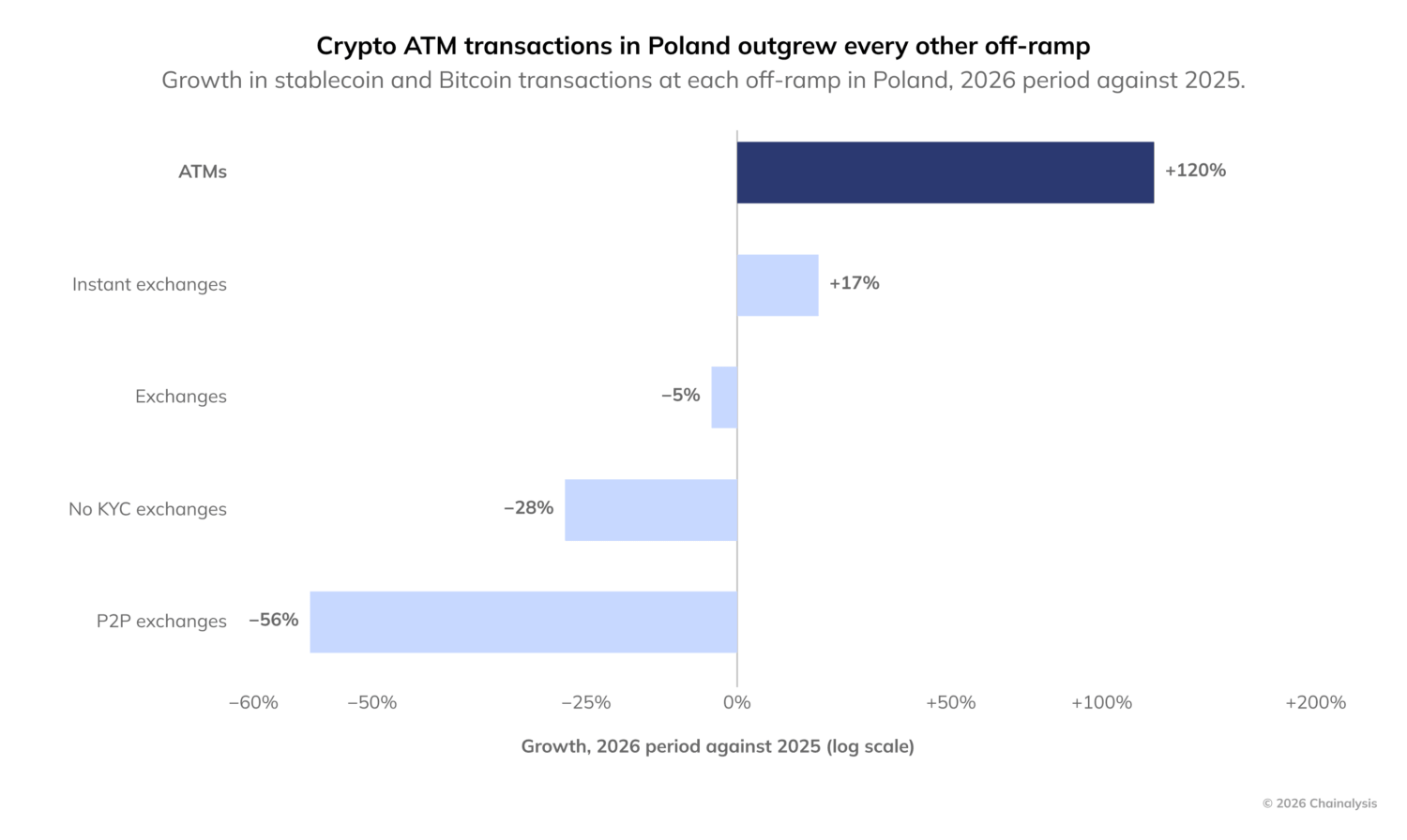
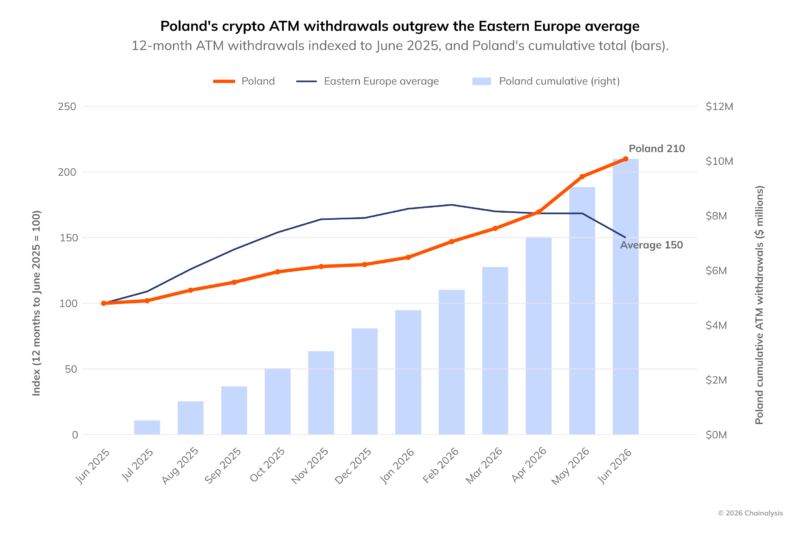
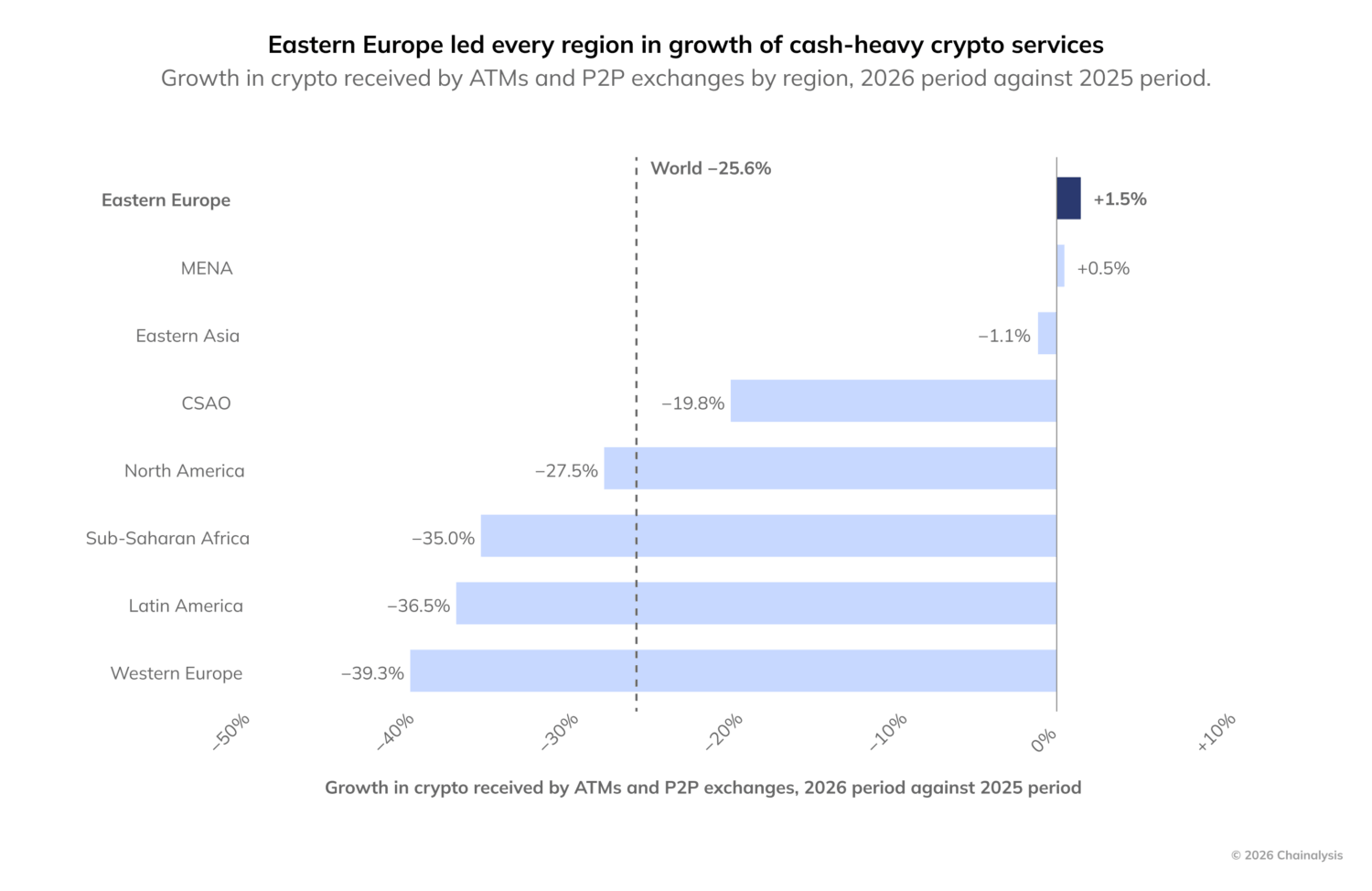
Poland also accounted for about 38.5% of Eastern Europe’s crypto ATMs. Over the measured year, its ATM withdrawal transaction count rose 21.8%, and the total fiat amount withdrawn rose 28.6%. Those ATM figures describe a separate cash-out channel; they do not show how much of the stablecoin P2P volume was converted to cash.