
A stablecoin payment can involve several distinct activities: receiving a token, converting its value, transferring Hong Kong dollars to a merchant and, in some products, holding the merchant’s balance for later use. The licences to examine depend on who performs each activity, not on whether the product is called “crypto payments.”
This overview reflects a legal-services analysis by Shao Jiadian of Mankun Blockchain published on November 16, 2026. Its distinctions are a starting point for assessing a product’s actual funds flow and contracts, not a determination that any particular arrangement is licensed or exempt.
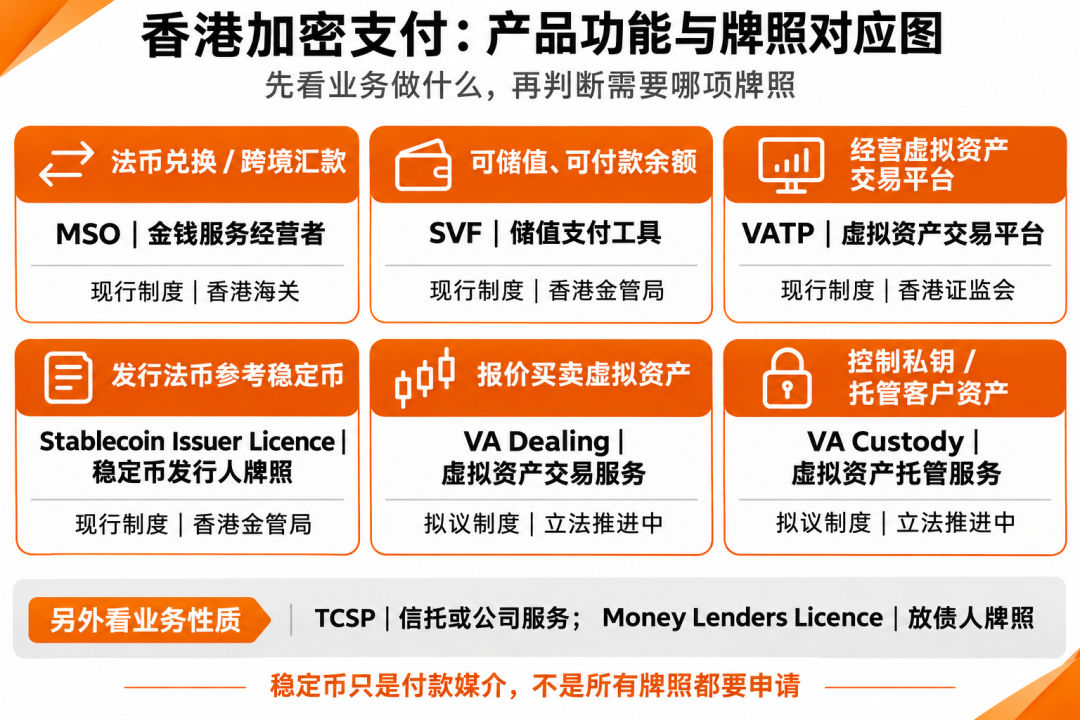
Fiat settlement and merchant balances
A Money Service Operator (MSO) licence is relevant to fiat-currency exchange and remittance. If a payment company accepts a customer’s instructions and arranges cross-border receipt or payment in Hong Kong dollars, the analysis says it must examine its role even if a bank makes the final transfer. An MSO licence does not itself authorize buying or selling stablecoins: converting a stablecoin into Hong Kong dollars is not the same activity as exchanging one fiat currency for another under the MSO framework. A company using a licensed MSO partner still needs to establish which party is responsible for each step.
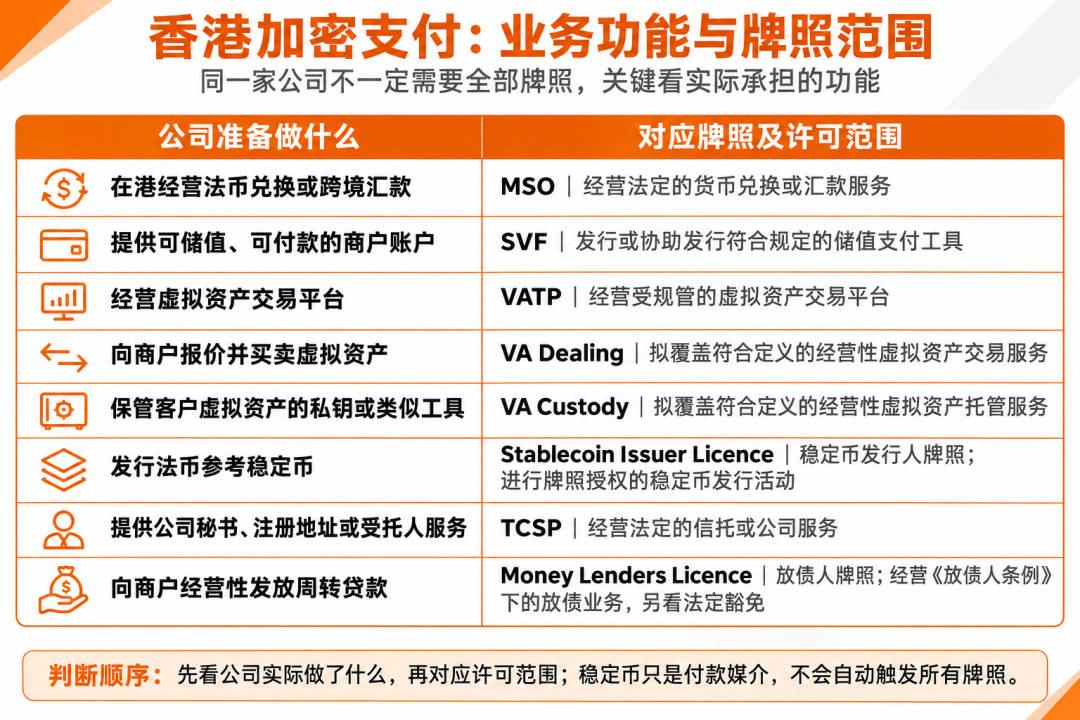
A Stored Value Facility (SVF) licence raises a different question. According to the analysis, a merchant balance that can remain on a platform and be used to pay third parties may bring the product into SVF territory. A balance alone does not settle the question; how it can be used matters. The analysis cites a minimum paid-up capital requirement of HK$25 million for an SVF applicant. Direct settlement to a merchant’s external bank account, without a reusable platform balance, is a materially different design.
Trading, issuance and control of assets
Merely using a stablecoin for settlement does not make a payment company its issuer. Hong Kong’s Legislative Council passed the Stablecoins Ordinance in May 2025, establishing a separate licensing framework for fiat-referenced stablecoin issuers. The source describes requirements concerning reserve assets, local presence, custody and ongoing audits; those issuer obligations should not be confused with a payment provider’s use of an existing token.
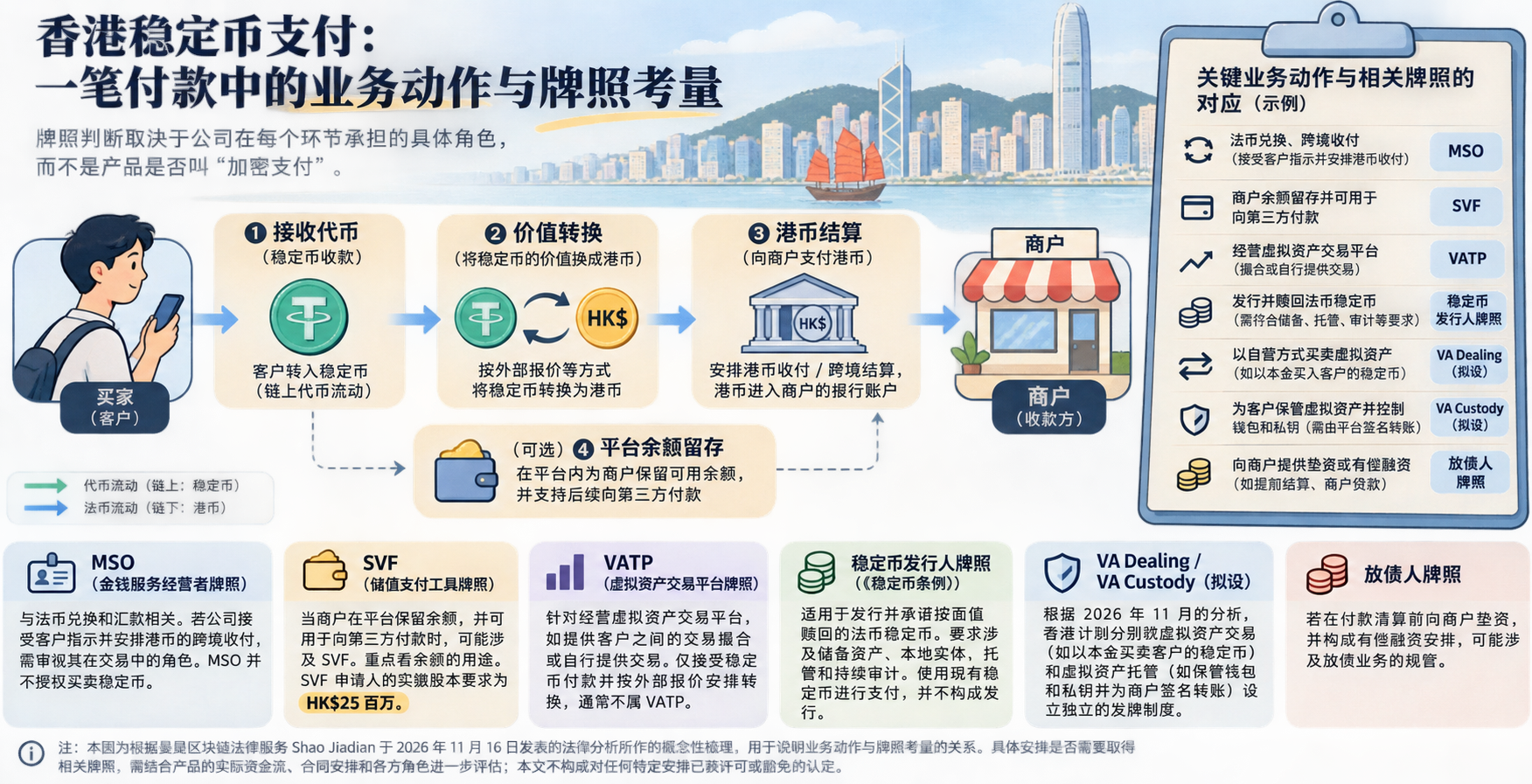
A Virtual Asset Trading Platform (VATP) licence concerns operating a trading platform, rather than simply accepting a stablecoin payment and arranging conversion through an external quote. But a product that lets customers trade against one another, or takes on a trading role itself, requires closer analysis.
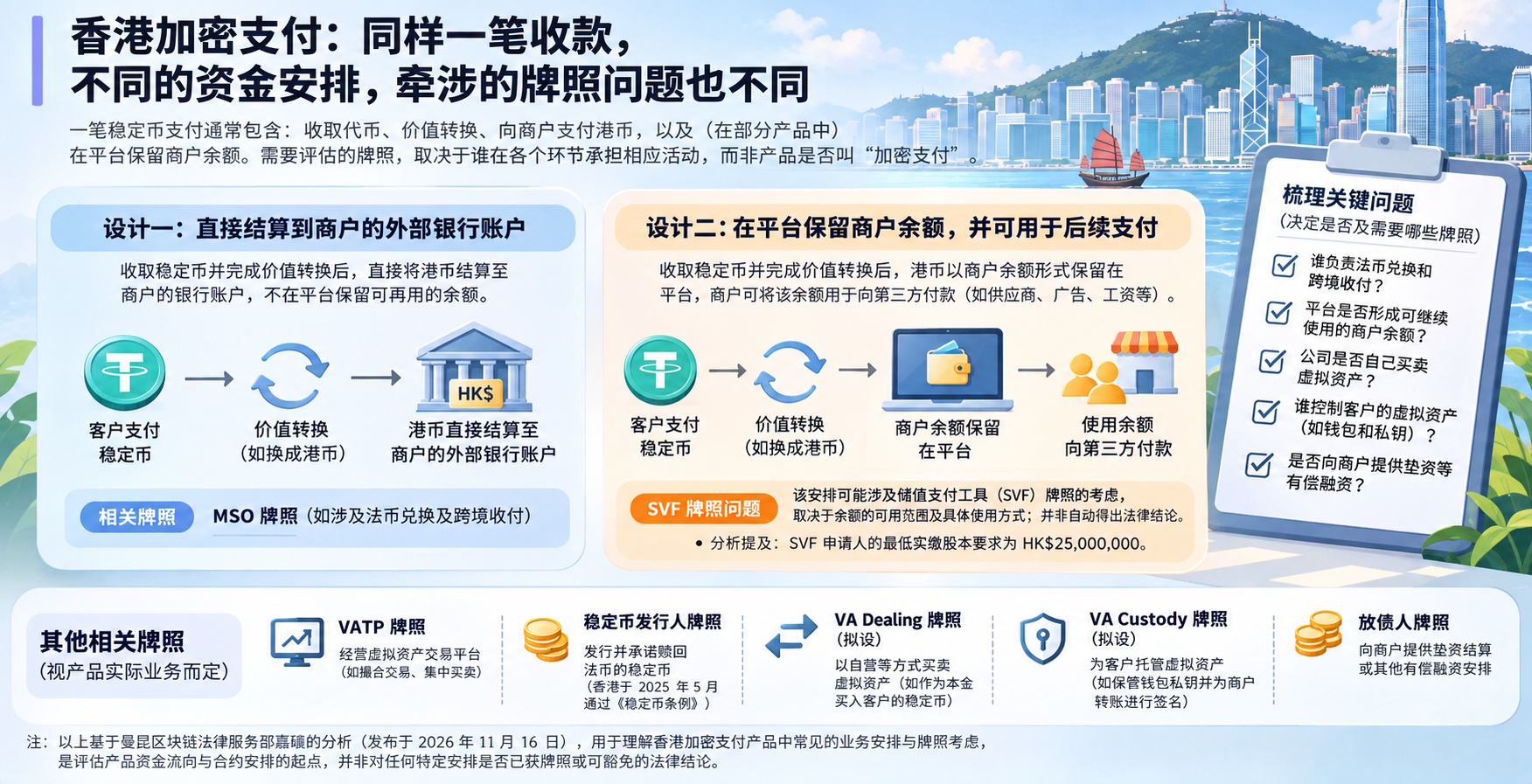
The source also distinguishes two activities it said were subject to planned separate licensing regimes as of its November 2026 reporting date: dealing in virtual assets, including a company buying customers’ stablecoins as principal, and custody of customers’ virtual assets. In the custody example, the platform holds wallet keys and must sign a merchant’s transfers. The analysis does not present the proposed VA Dealing and VA Custody licences as already enacted requirements.
Finally, advancing money to merchants before their payments clear could raise money-lending questions if the arrangement amounts to paid financing. The practical first step is to map who receives the funds, who controls the tokens and keys, when the merchant gets paid, and whether any balance can be spent again. Those facts determine which licensing questions need to be examined.