
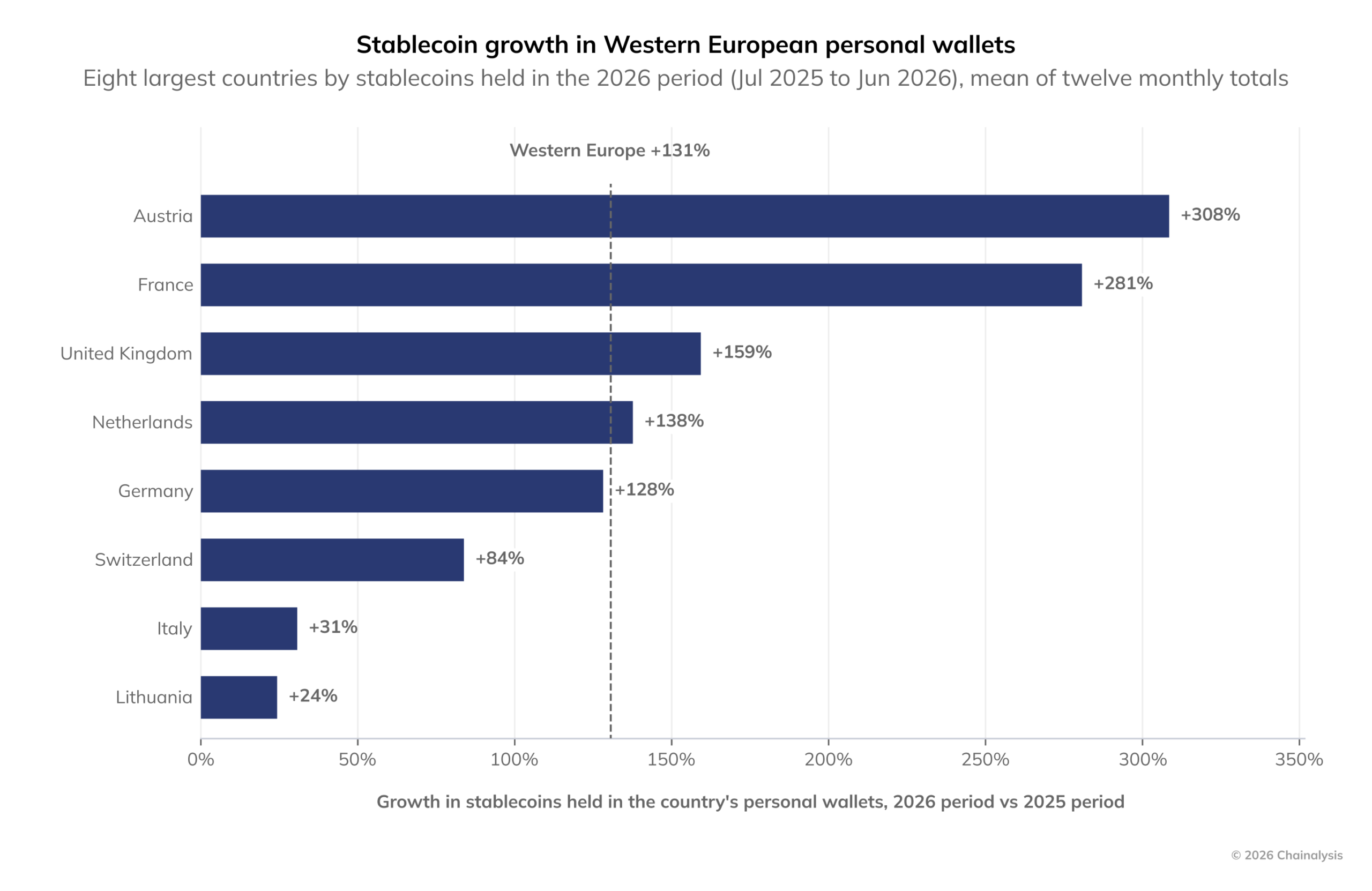
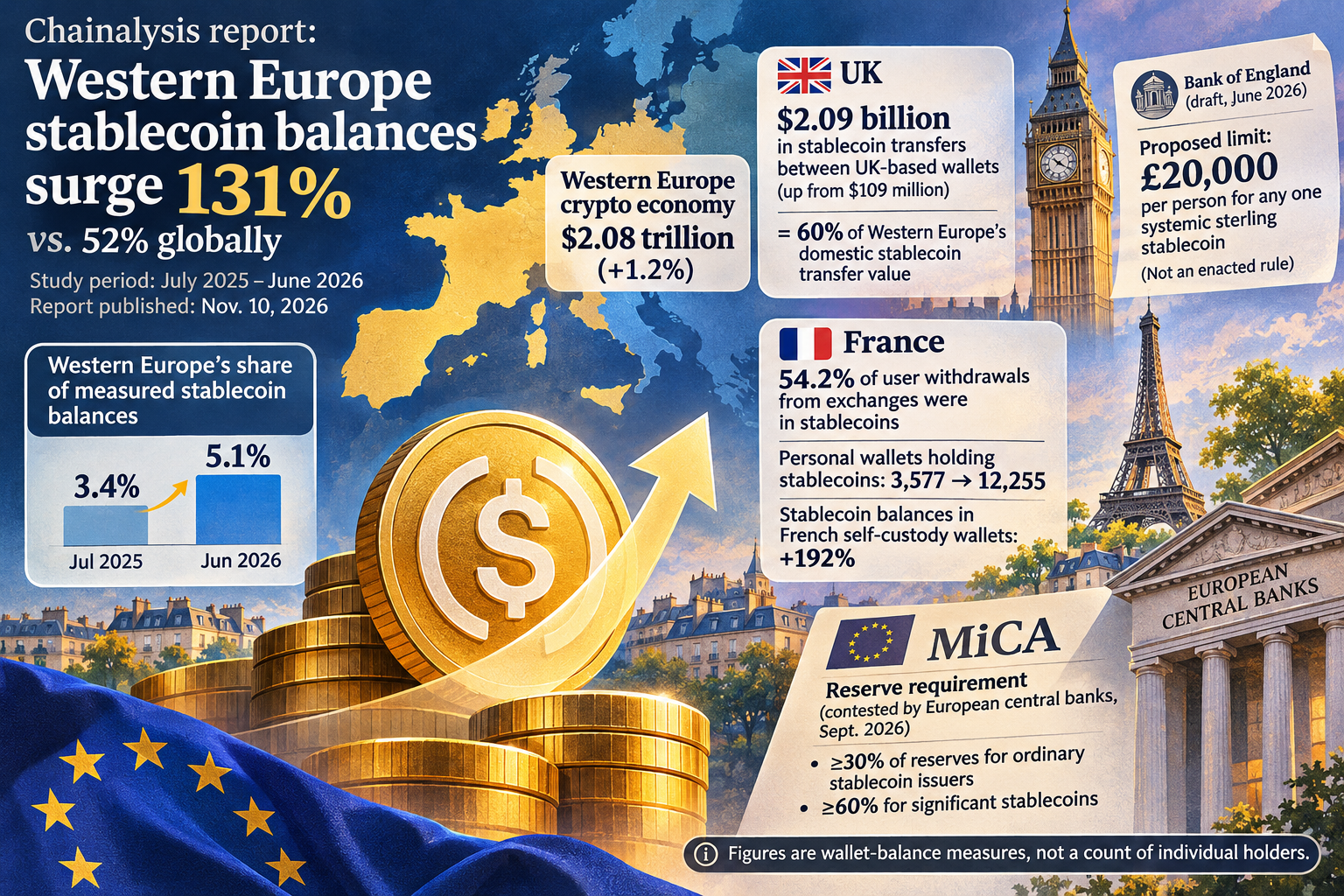
In a report published on November 10, 2026, Chainalysis said stablecoin balances in the personal wallets it tracked across Western Europe rose 131% during its July 2025–June 2026 study period, compared with 52% globally. Western Europe’s share of the stablecoin balances measured rose from 3.4% to 5.1%. These are wallet-balance measures, not a count of individual holders.
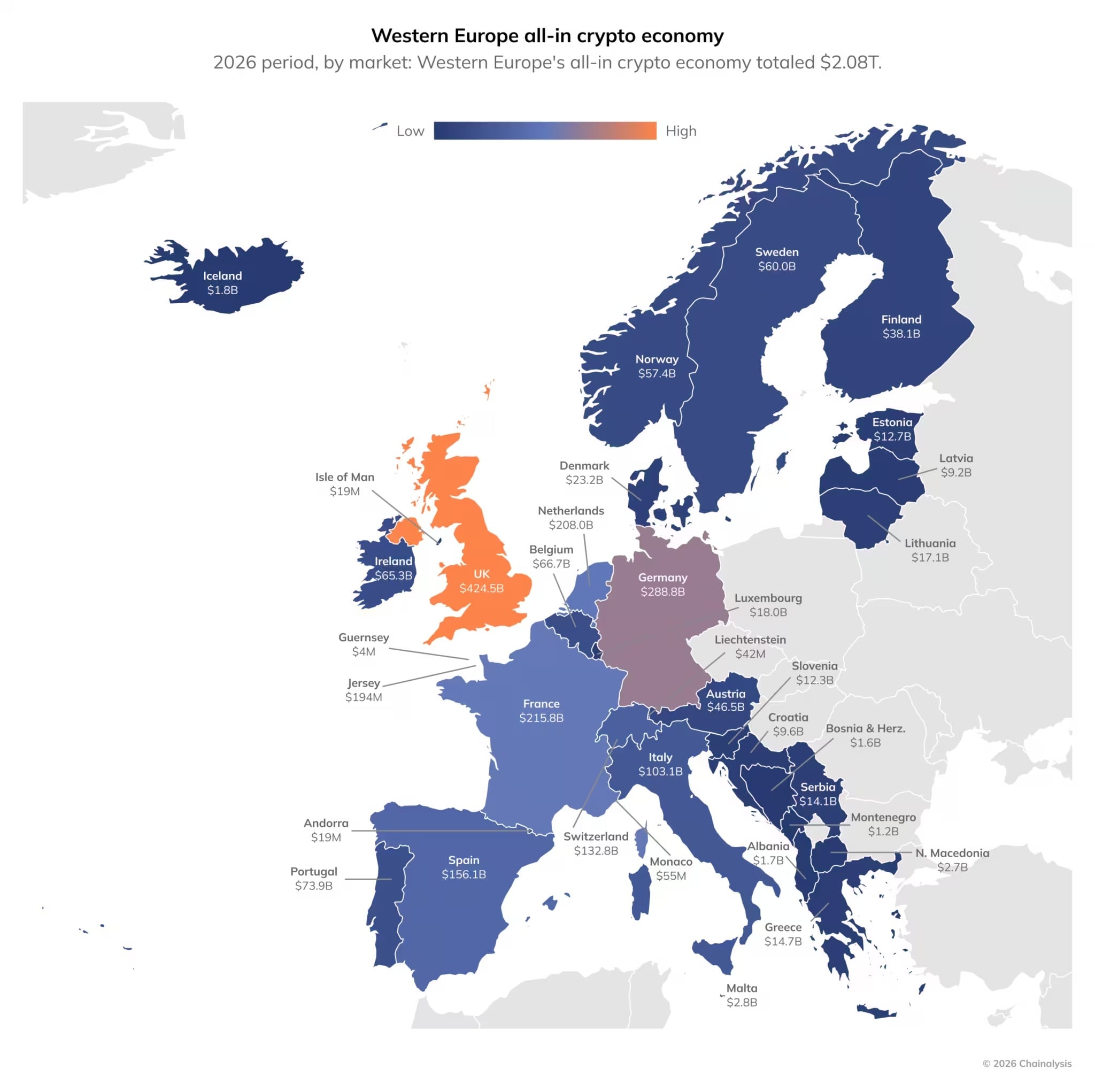
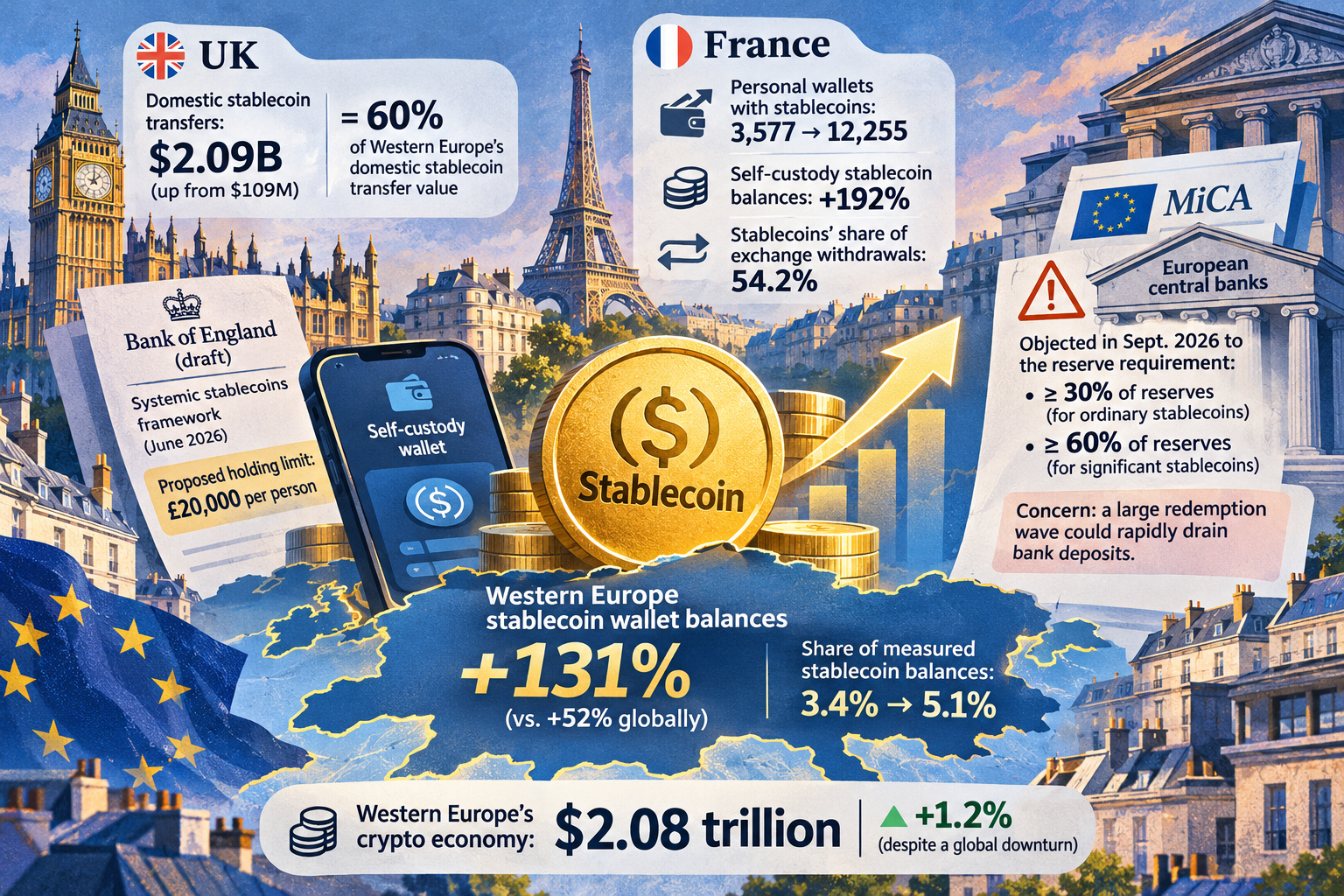
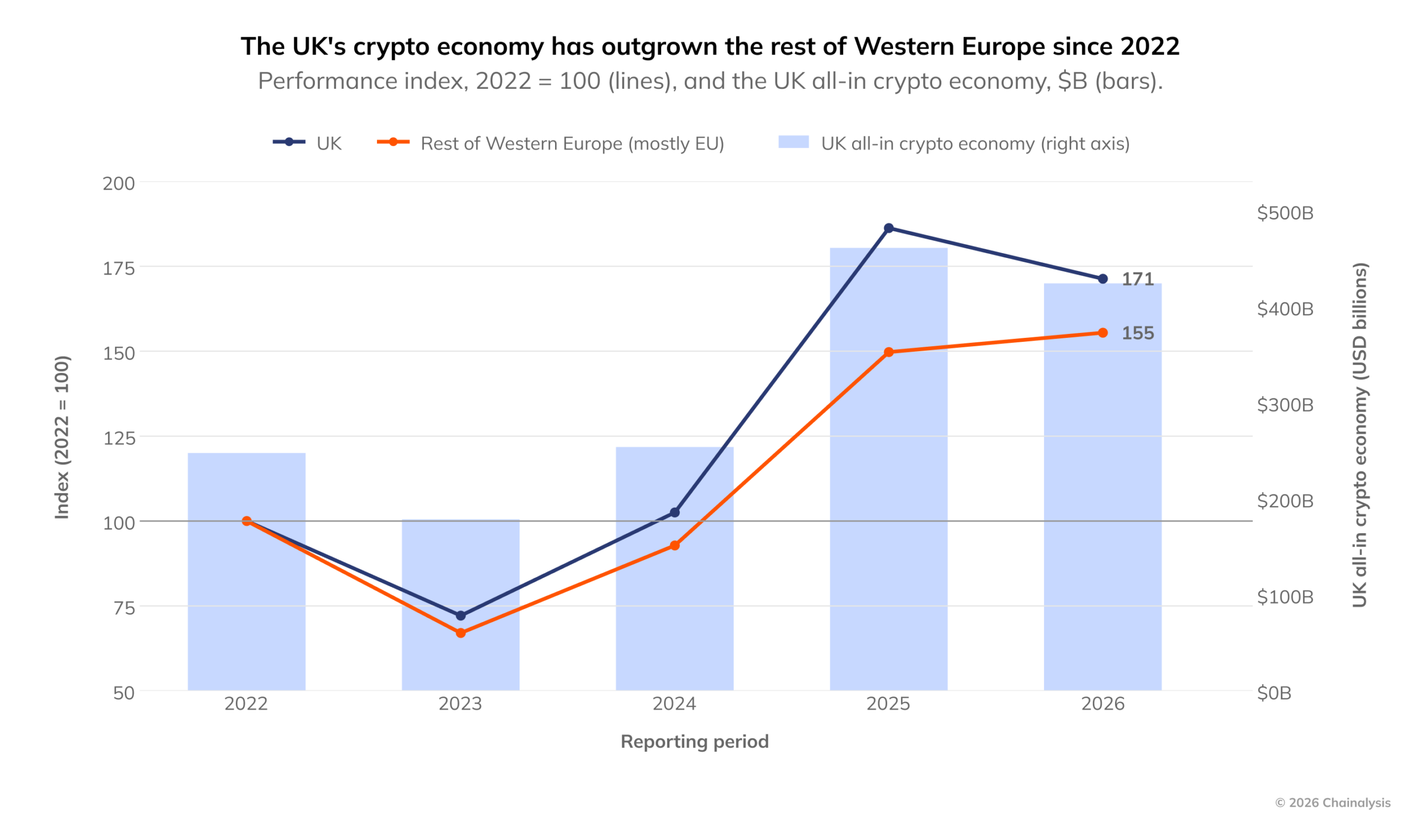
The figures sit within a broader estimate: Chainalysis put Western Europe’s crypto economy at $2.08 trillion for the period, up 1.2% despite a global downturn. Its country-level findings show different ways stablecoins were being held and transferred.
UK transfers and a proposed holding limit
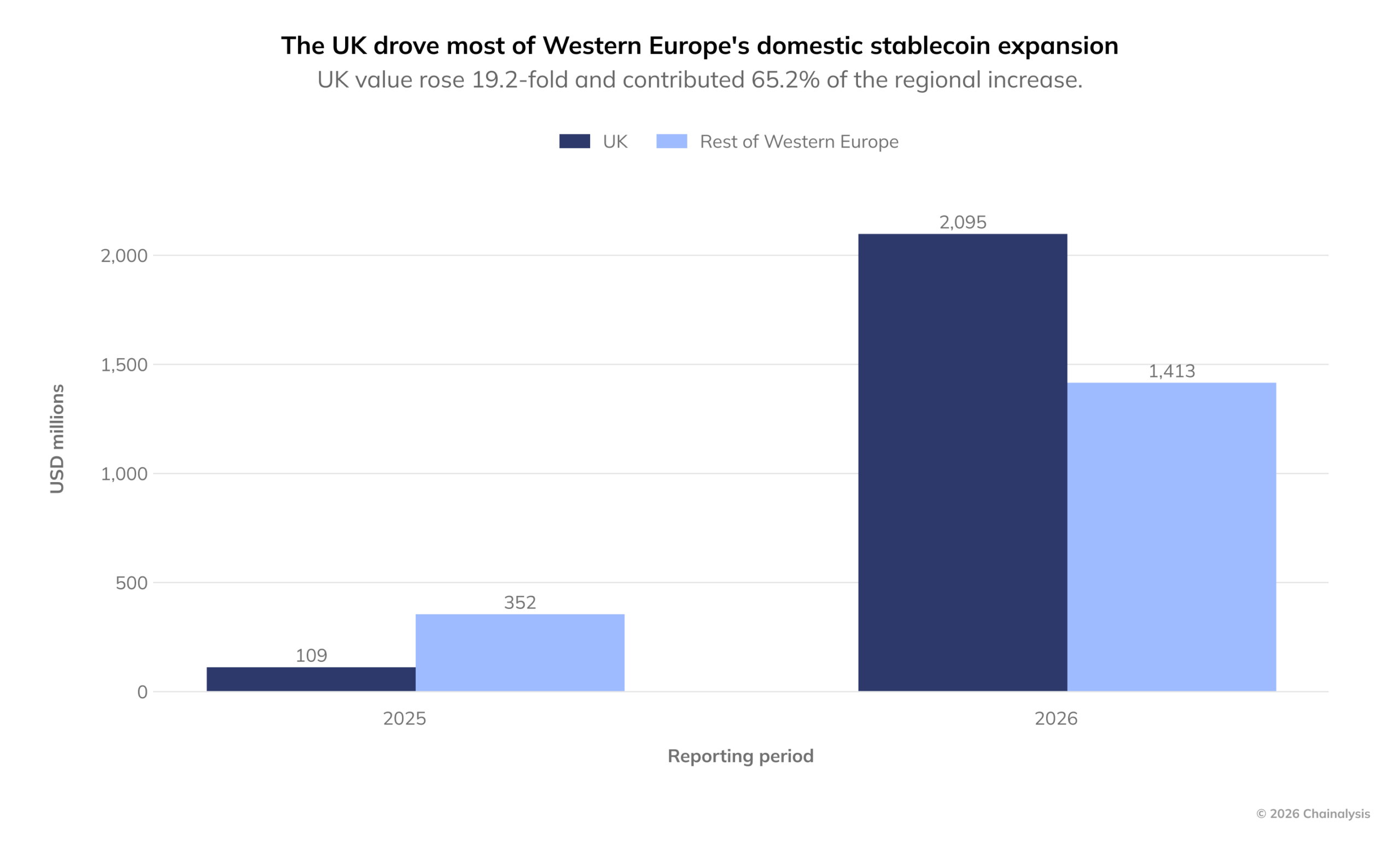
Chainalysis recorded $2.09 billion in stablecoin transfers between UK-based wallets during the study period, up from $109 million in the preceding year. The UK accounted for 60% of the value of domestic stablecoin transfers across Western Europe, according to the report. That describes observed transfers; it does not establish why each payment was made.


The report also noted that the Bank of England published a draft framework for systemic stablecoins in June 2026. Its proposed limit of £20,000 per person for any one systemic sterling stablecoin should not be read as an enacted holding rule.
French wallets and self-custody
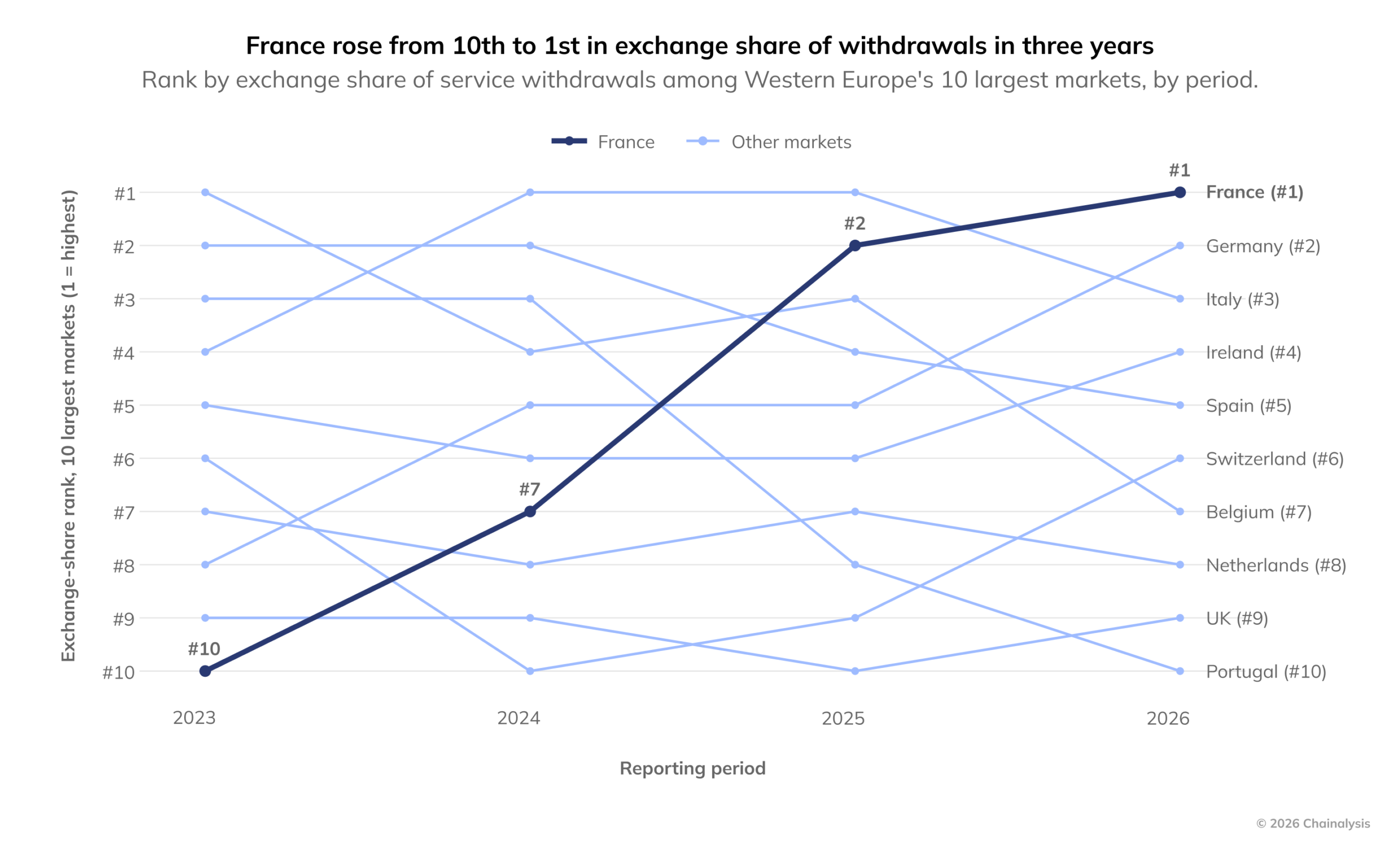
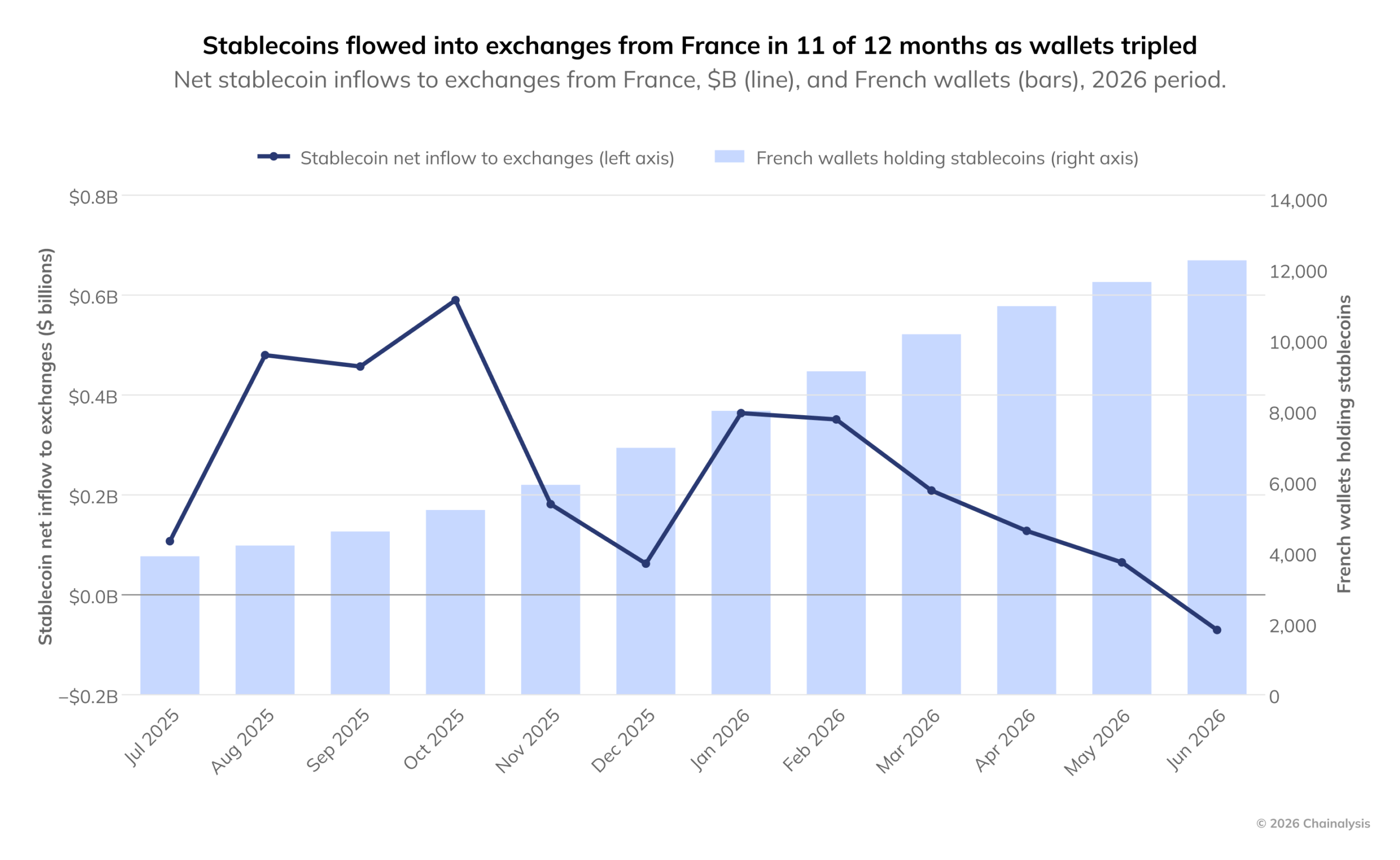
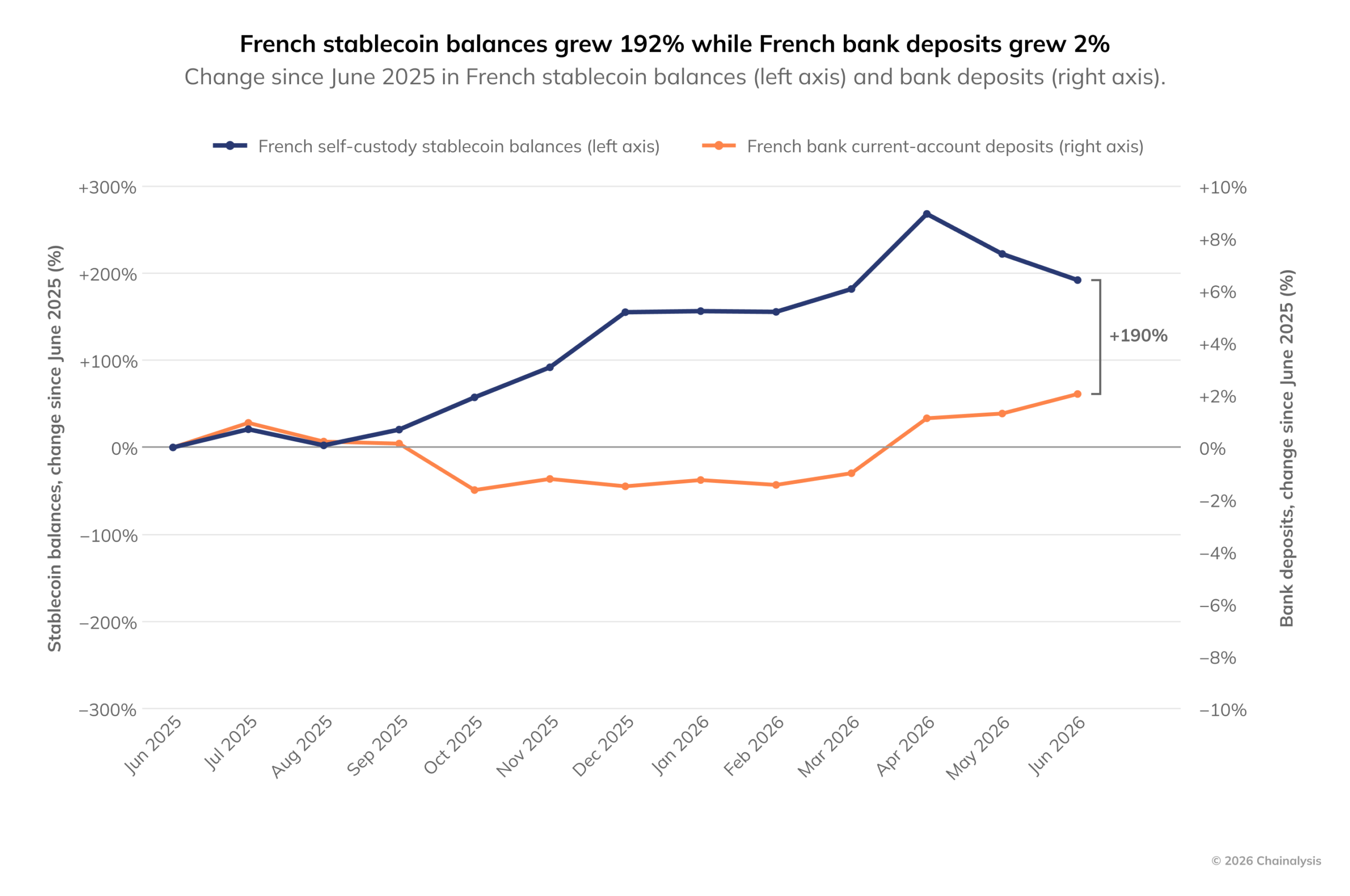
In France, stablecoins accounted for 54.2% of the amount users withdrew from exchanges during the study period, Chainalysis reported. The number of French personal wallets holding stablecoins rose from 3,577 in June 2025 to 12,255 in June 2026, while the stablecoin balances in French self-custody wallets increased 192% over the period.
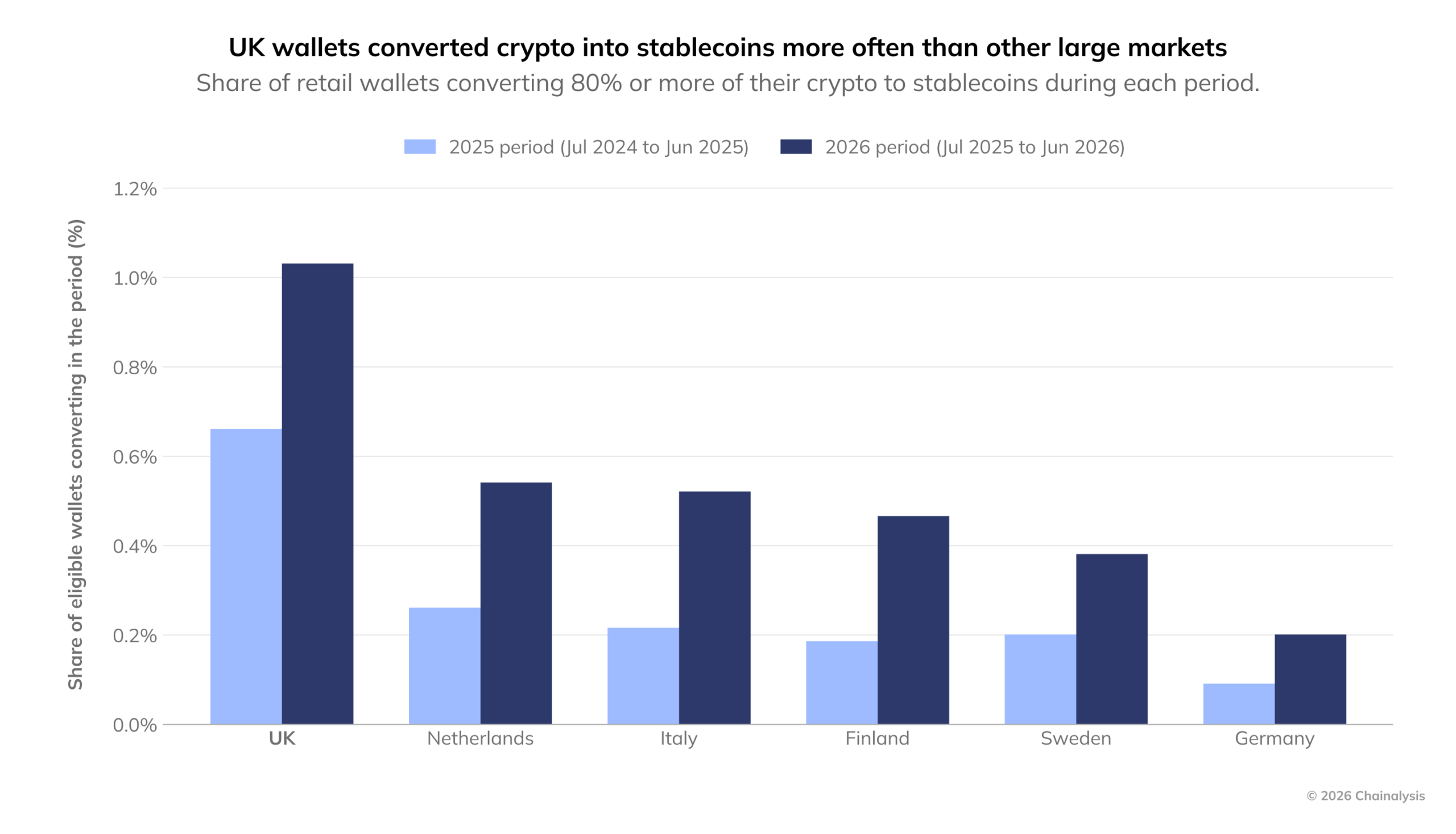
The report places these shifts alongside concerns about French public finances. That timing does not prove fiscal pressure caused the wallet activity, nor do wallet counts establish how many distinct people held stablecoins.
The reserve question
Greater use also sharpens questions about where issuers keep backing assets. According to the report, European central banks objected in September 2026 to a MiCA reserve requirement placing at least 30% of ordinary stablecoin issuers’ reserves—and 60% for significant stablecoins—in European bank deposits. The concern attributed to the central banks was that a large redemption wave could rapidly drain those deposits.

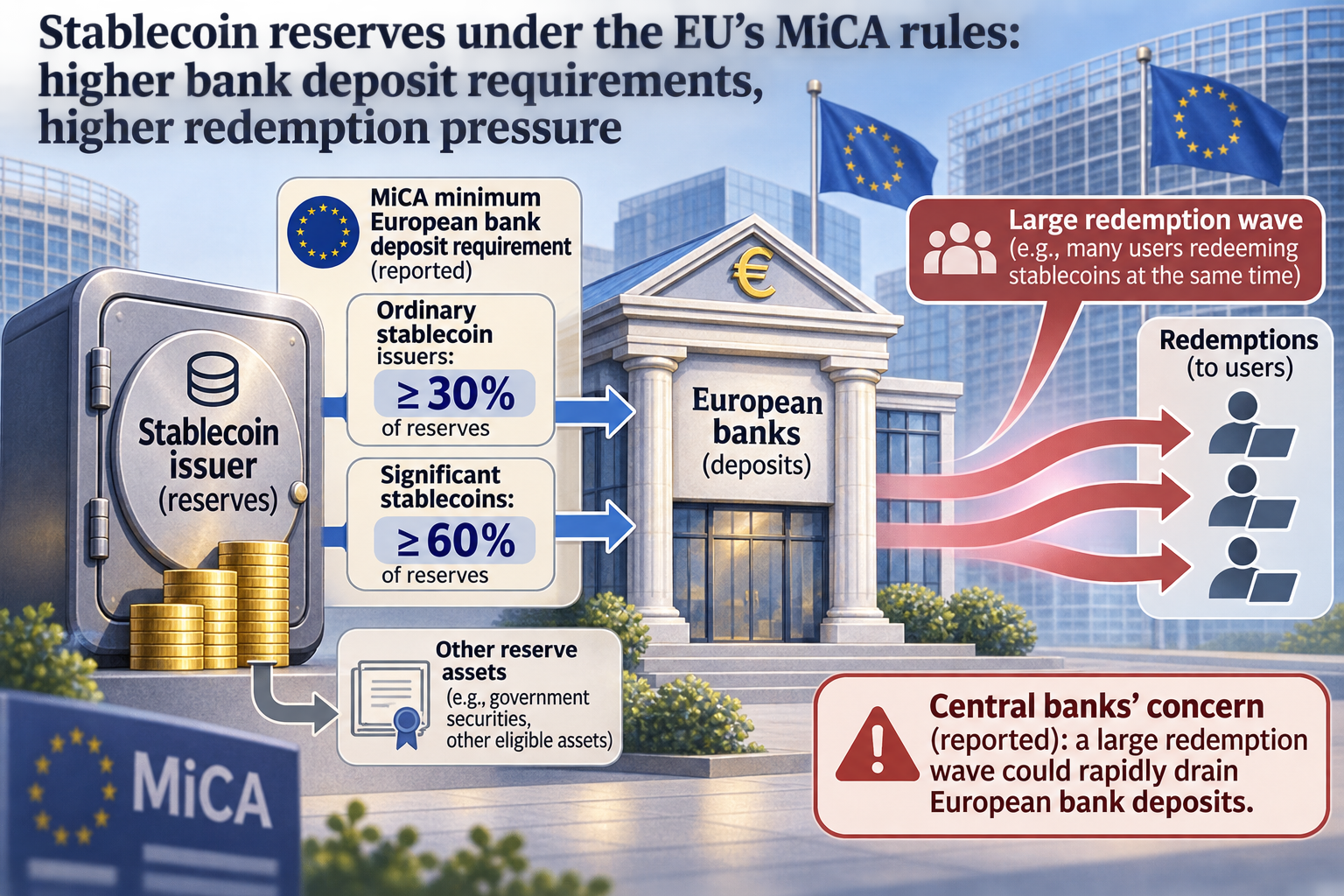
Those percentages describe the reported regulatory requirement, not the reserve composition of any particular token. The report provides no issuer-specific reserve audit or basis for treating a stablecoin as risk-free or always redeemable.