A November 18, 2026 report by Deep Tide TechFlow said the World Bank Group, Citi and Circle planned to explore using USDC and blockchain networks to supplement existing cross-border development aid transfers. The reported pilot was intended to reduce intermediary-bank costs, shorten settlement times and improve visibility into payments. It was not described as an operational replacement for the existing system.
How the proposed settlement would work
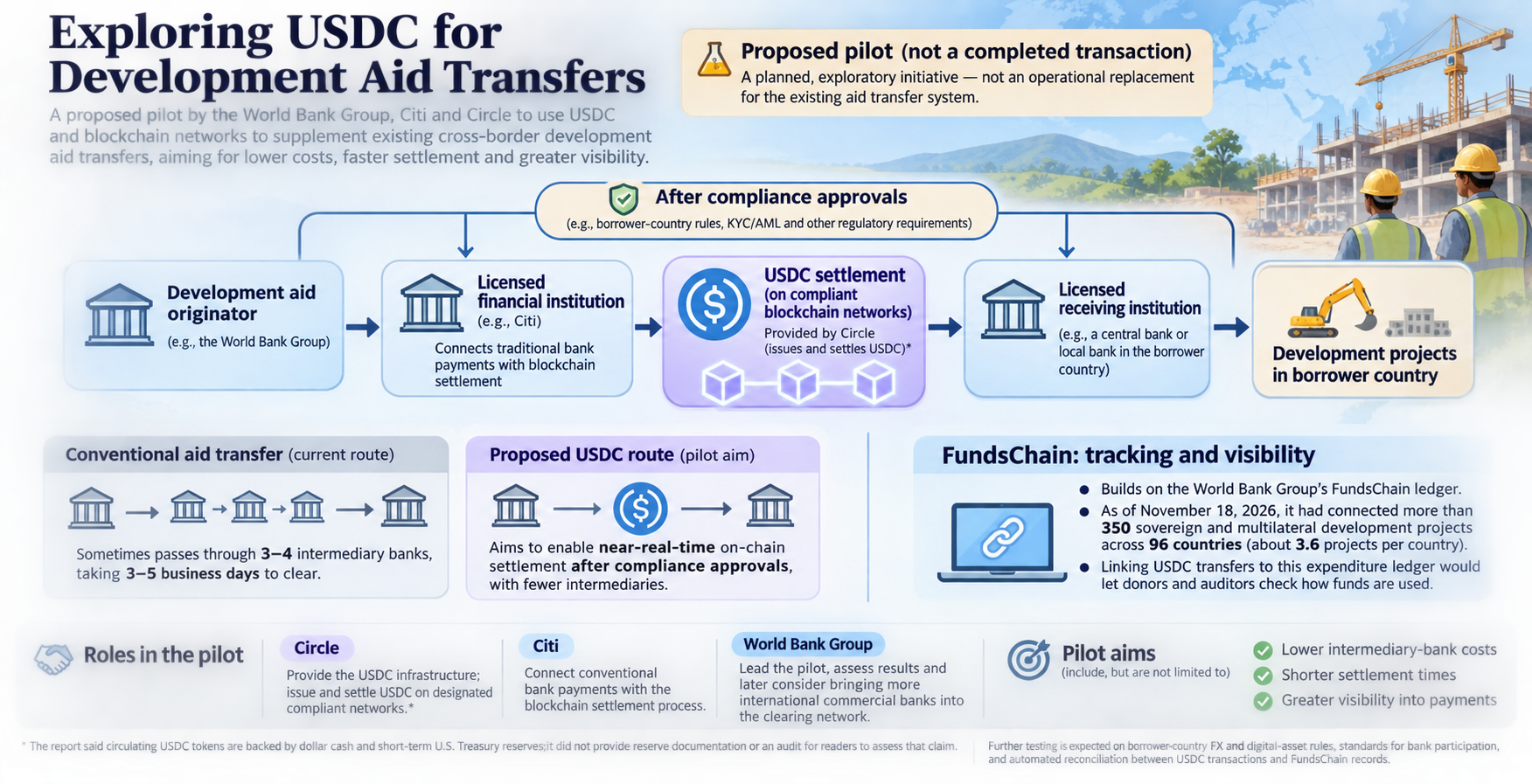
Under the arrangement described in the report, Circle would provide the USDC infrastructure, while Citi would connect conventional bank payments with the blockchain settlement process. Initial work would focus on borrower countries where digital-asset use is legally permitted and on a model involving licensed financial institutions, central banks and local banks. The World Bank Group would later assess whether to bring more international commercial banks into the clearing network.
The report said Circle’s role included issuing and settling USDC on designated compliant networks, and described circulating tokens as backed by dollar cash and short-term US Treasury reserves. It did not provide reserve documentation or an audit for readers to assess that claim.
TechFlow described conventional aid transfers as sometimes passing through three or four intermediary banks and taking three to five business days to clear. It said the proposed USDC route could enable near-real-time on-chain settlement after compliance approvals. Those are aims of the pilot, not reported results.
Tracking disbursements
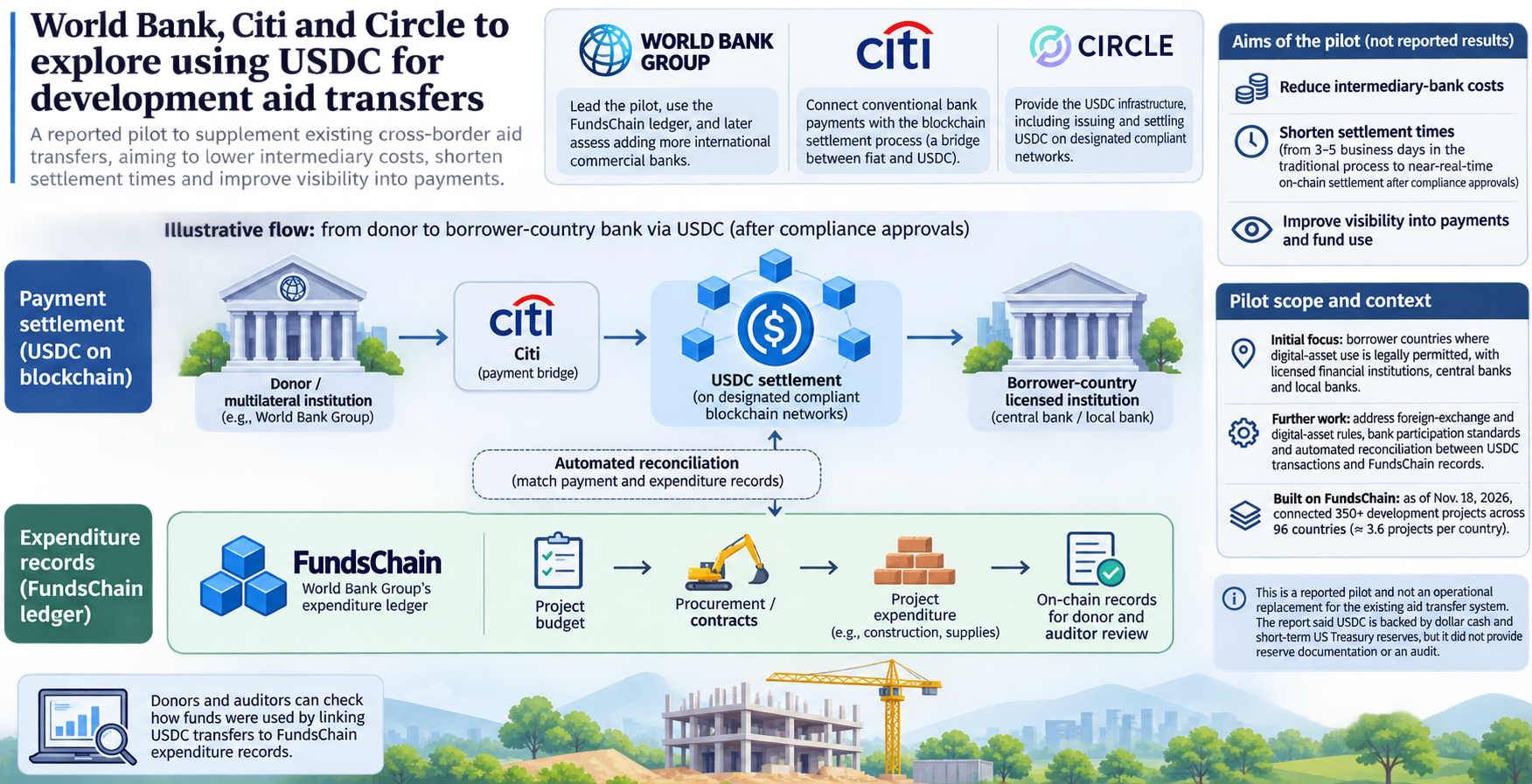
The report said the work would build on the World Bank Group’s FundsChain ledger, which, as of November 18, 2026, had connected more than 350 sovereign and multilateral development projects across 96 countries—an average of about 3.6 projects per country. Linking USDC transfers to that expenditure ledger was presented as a way for donors and auditors to check how funds were used.
Further joint testing was expected to address borrower-country foreign-exchange and digital-asset rules, standards for bank participation, and automated reconciliation between stablecoin transactions and FundsChain records. The report characterized the initiative as a first for regulated-stablecoin use in sovereign development aid disbursements; it did not report completed USDC aid transfers.