
When stolen funds move through stablecoins, an issuer’s ability to freeze tokens and the legal authority to request a freeze are separate questions. A November 19, 2026 commentary by ChainArgos founder Jon Reiter used a reported Binance theft to examine that distinction. The supplied account does not independently establish the reported loss of more than $6 billion or the circumstances of the freezes it describes.
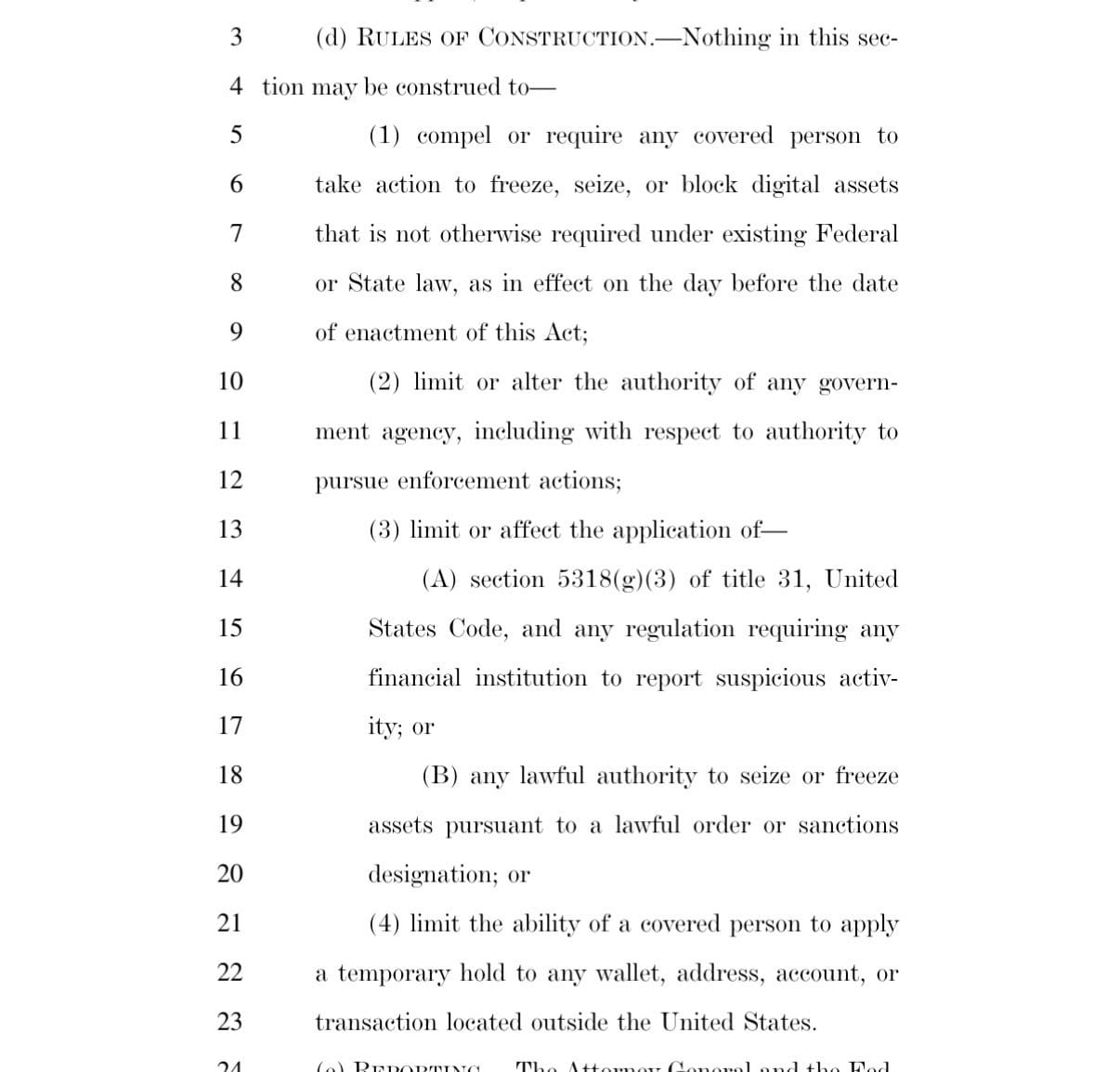
Senator Cynthia Lummis argued that the proposed CLARITY Act would have given crypto firms legal protection to freeze suspicious transactions promptly after a law-enforcement request. Amanda Fischer, policy director and chief operating officer of Better Markets, disputed that reading, arguing that stablecoin issuers would need a court order. Reiter offered a narrower reading of a Senate draft provision: he said Section 305 would allow temporary intervention by stablecoin issuers and digital-asset service providers following a written law-enforcement request, with protection against civil claims. These are competing interpretations of a proposal, not an enacted rule established by the commentary.
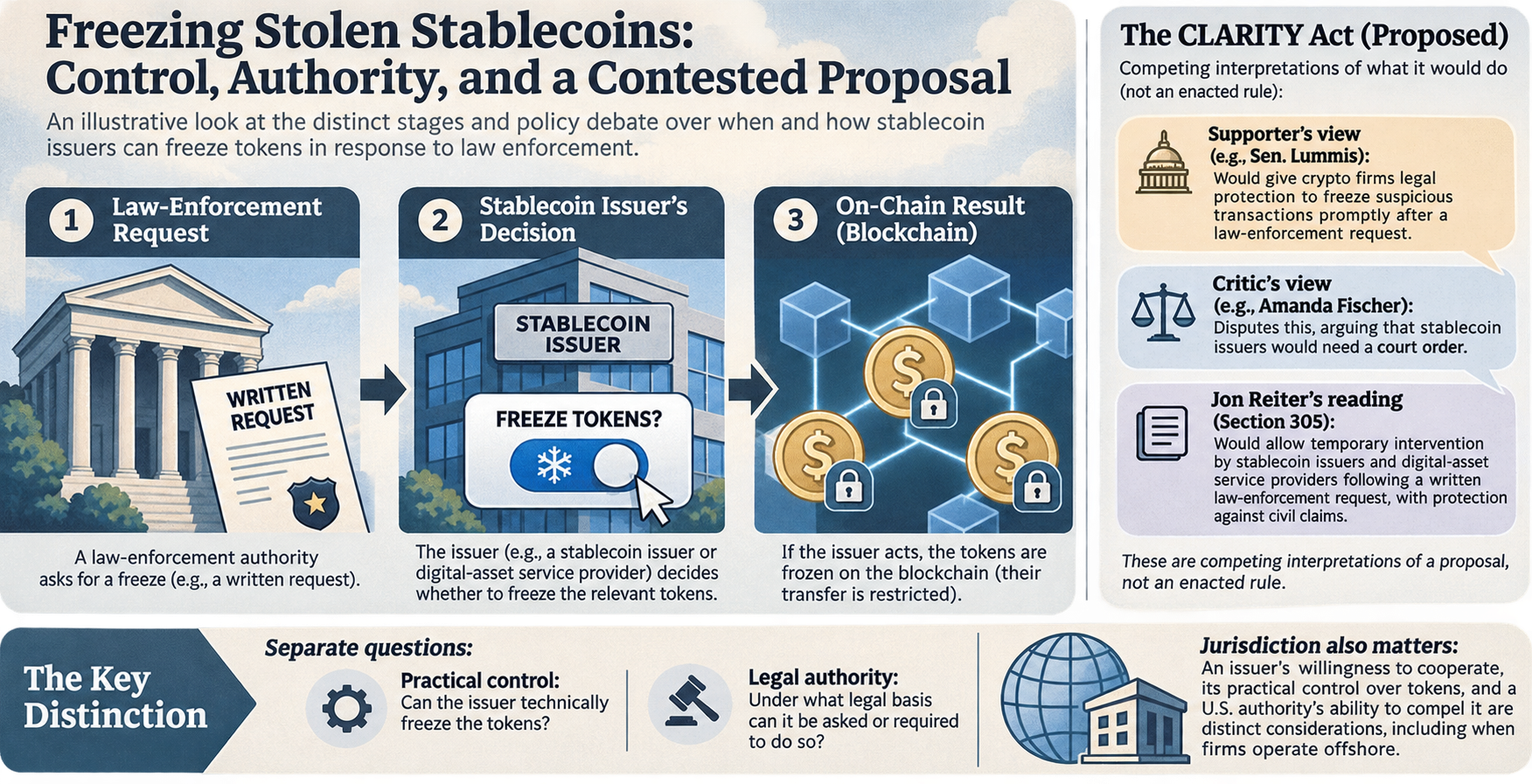
Reiter’s central point was about what happened without that proposed protection. He wrote that Circle, Tether and the Arbitrum Security Council acted quickly to freeze assets without formal judicial process. That is his account of their actions, not evidence that every freeze had the same legal basis or mechanism.
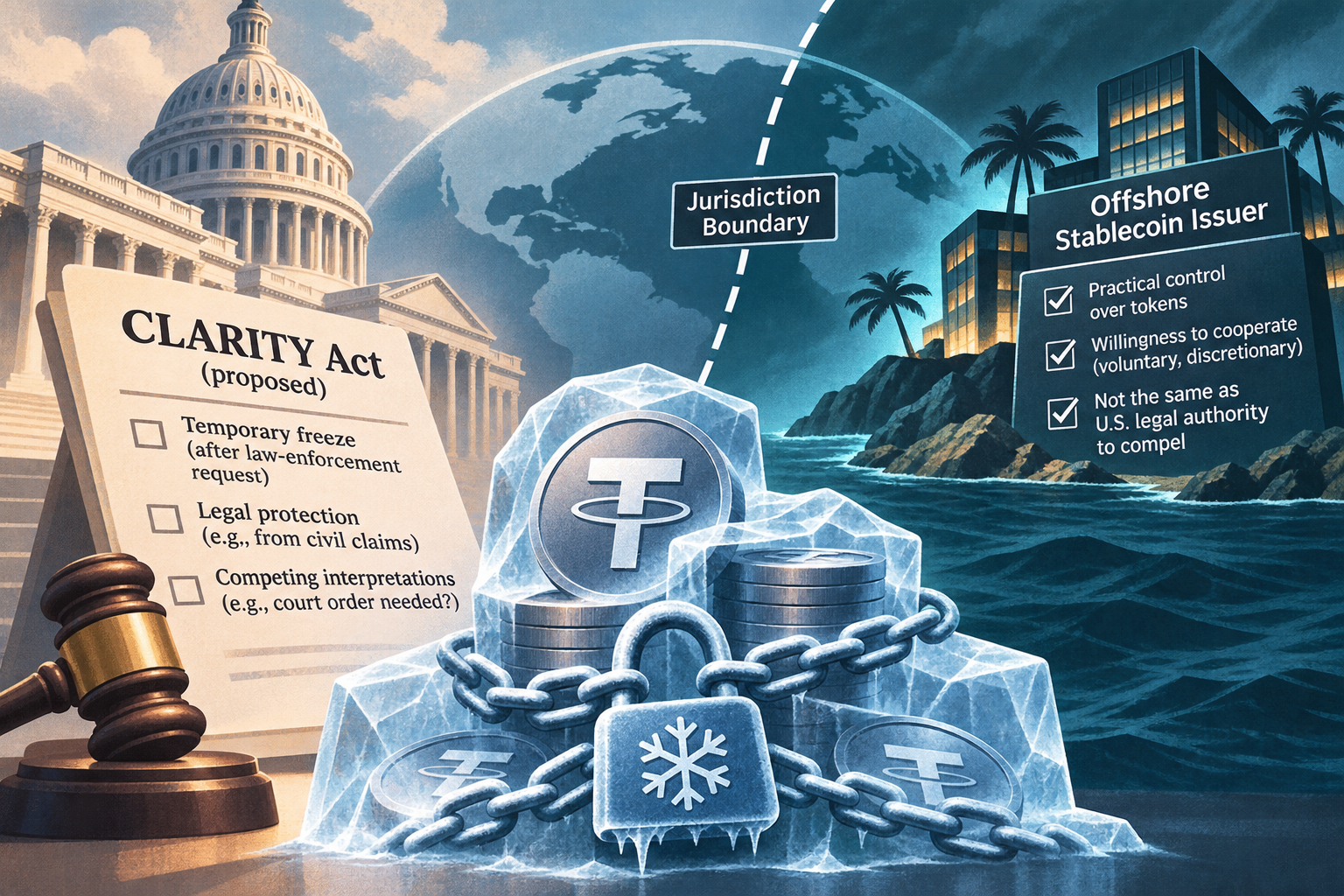
He also questioned whether a U.S. law would have changed decisions by Binance or Tether, which he described as offshore entities. His argument is that an issuer’s practical control over tokens, its willingness to cooperate and a U.S. authority’s ability to compel it should not be treated as the same thing. The commentary does not establish that offshore firms are beyond all U.S. legal reach.