In a report published Nov. 18, 2026, S&P Global Ratings kept Tether’s USDt at 5 (weak), the lowest score on its stablecoin stability scale. The score, which assesses USDt’s ability to maintain its dollar peg, was unchanged from November 2025.
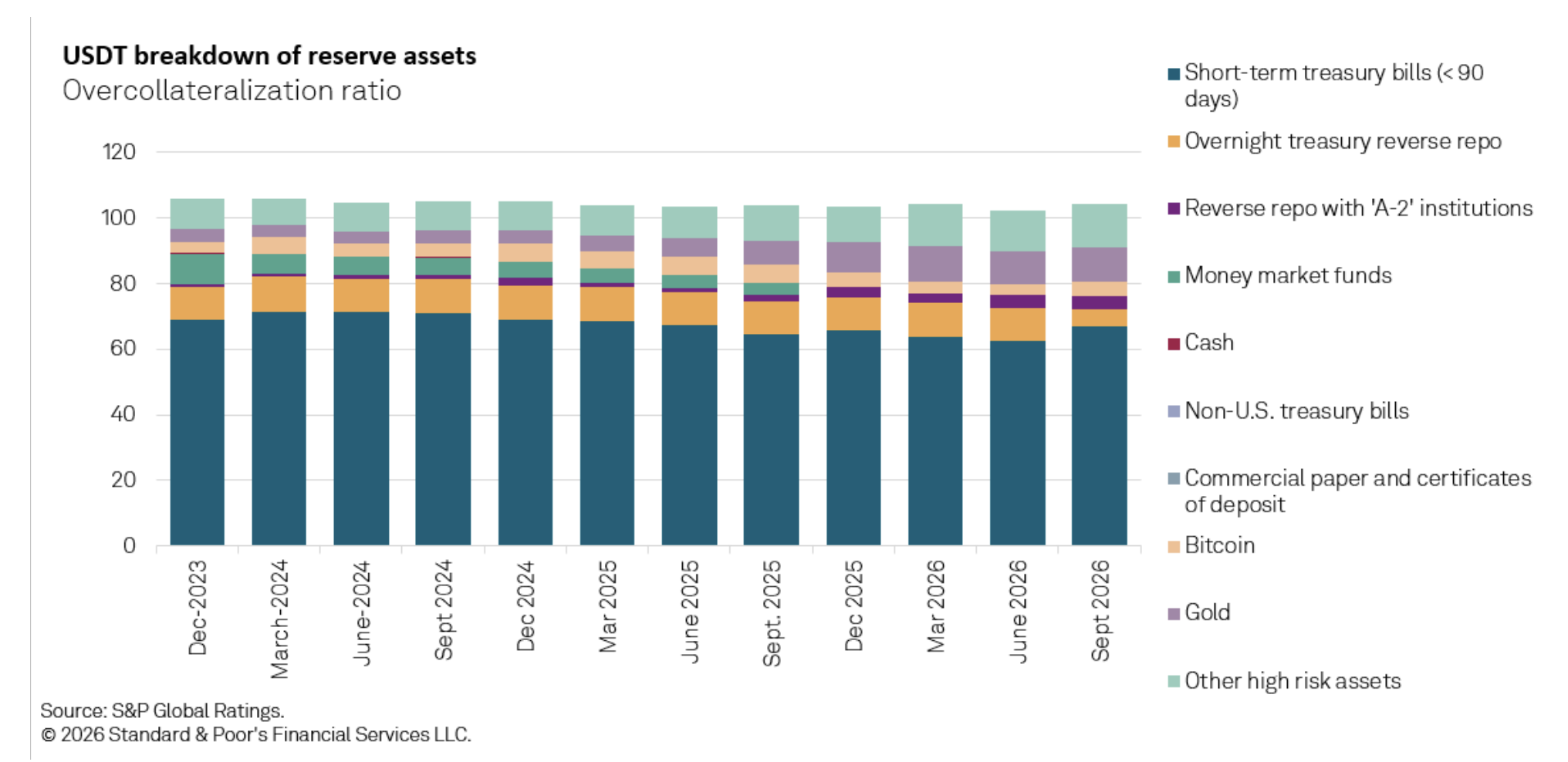
S&P said higher-risk holdings—including gold, Bitcoin, public equities, secured loans and corporate bonds—were equivalent to 28% of USDt in circulation as of Sept. 30, 2026, up from 24% a year earlier. A substantial fall in their value could leave USDt undercollateralized, the agency warned.
Tether disputed the assessment. “The problem is S&P’s framework, not our reserves,” it told Cointelegraph, invoking The Big Short in its response.
Reserves and oversight
Tether’s Sept. 30 reserve report, attested by BDO, showed approximately $191.5 billion in assets and $183.5 billion in liabilities, or roughly $7.95 billion in excess assets. An attestation of a reserve report is not the same as a full audit.
S&P also questioned reserve safeguards under El Salvador’s oversight framework. According to the agency, the country’s National Commission of Digital Assets requires 70% of reserves to be held in assets that can be liquidated within 30 days. S&P described that framework as broad enough to include assets such as gold, Bitcoin and loans. It also cited the absence of a reserve-segregation requirement and said publicly available information did not show how the assets were insulated from broader corporate risks.
In August 2026, KPMG confirmed it had issued an unqualified opinion on Tether’s 2025 accounts in what the company described as its first full independent audit. S&P said the audited statements and auditor’s report had not been published, limiting its ability to check the underlying information. It also noted that reserve reports do not name custodians or counterparties and that attestations remain quarterly.
S&P said it found further weaknesses but could not lower the score below 5. It also acknowledged USDt’s history of price stability, particularly over the preceding 12 months. That market-price record does not resolve the agency’s questions about reserves and oversight.